
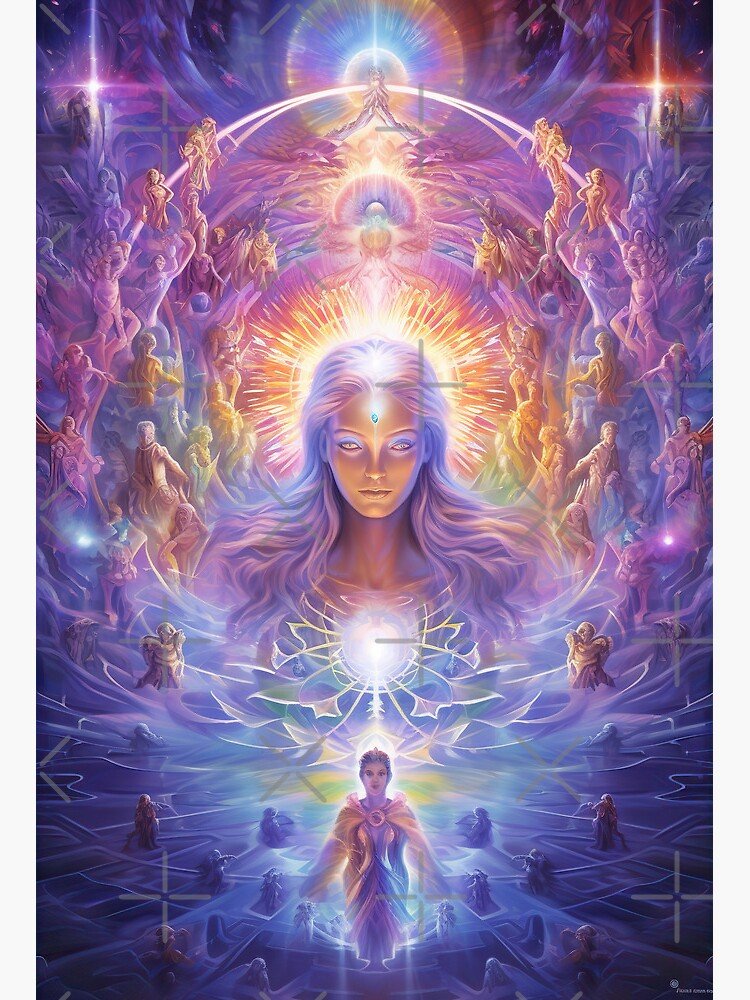
The concept of Ascended Masters is prevalent in various spiritual traditions, particularly within Theosophy and New Age beliefs. These masters are considered highly evolved beings who have transcended the cycles of reincarnation and achieved a state of enlightenment. Their purpose is to assist humanity in its spiritual evolution, providing guidance, wisdom, and support to those who seek a deeper understanding of their purpose and connection to the universe.
Historical Context
The idea of Ascended Masters can be traced back to the late 19th and early 20th centuries, significantly influenced by Theosophical teachings. Helena Blavatsky, one of the founders of the Theosophical Society, introduced the notion that enlightened beings exist who guide spiritual seekers. Other notable figures, like Alice Bailey and Charles Leadbeater, further expanded on these teachings, identifying specific masters such as Kuthumi, Djwhal Khul, and Saint Germain. Each of these figures is associated with particular spiritual lessons and attributes, reflecting the diverse aspects of human experience and spiritual growth.
Characteristics of Ascended Masters
Ascended Masters are often depicted as possessing profound knowledge and understanding of cosmic laws. They embody qualities such as unconditional love, compassion, wisdom, and divine power. Unlike conventional notions of saints or spiritual leaders, these beings are believed to operate beyond human limitations. They are not bound by physical forms or time and space; instead, they can assist individuals through spiritual transmissions, teachings, and energetic influences.
The Role of Ascended Masters in Spirituality
- Guidance and Teaching: Ascended Masters are revered as teachers who impart knowledge about the nature of reality, the soul’s journey, and the principles of spiritual evolution. Their messages often emphasize the importance of love, oneness, and developing a personal connection to the divine.
- Spiritual Ascension: Many followers of Ascended Master teachings believe that through meditation, study, and service, they can elevate their own consciousness and align more closely with these masters. The process of ascension is seen as a journey toward higher states of being, where one integrates spiritual wisdom and transforms personal challenges into opportunities for growth.
- Support During Times of Change: In an era marked by significant social, environmental, and spiritual upheaval, many individuals turn to Ascended Masters for comfort and guidance. Their teachings are often viewed as a source of hope and inspiration, encouraging people to navigate the challenges of modern life with strength and grace.
Criticism and Skepticism
Despite their popularity, the concept of Ascended Masters is met with skepticism by some, particularly those with more mainstream religious or scientific perspectives. Critics argue that the teachings lack empirical evidence and can lead to dependent thought patterns. Furthermore, the notion of following non-physical guides is sometimes seen as a diversion from more conventional spiritual practices, such as prayer or meditation grounded in a recognized tradition.
The idea of Ascended Masters serves as a fascinating framework for understanding spiritual guidance and personal transformation. While interpretations may vary across different traditions, the central theme remains: the pursuit of enlightenment and the betterment of humanity. Whether one views Ascended Masters as symbolic representations of inner wisdom or as actual beings guiding humankind, their teachings encourage individuals to seek deeper connections with themselves, others, and the universe. In an age characterized by uncertainty, the messages of love, unity, and spiritual awakening provided by these masters resonate powerfully, inviting us to embark on our own journeys of ascension.




 Love
Love Astrologer
 Dreams
 Life Coach
 Medium
 Numerologist
 Palm Reader
 Paranormal
 Past Life
 Tarot Reader