
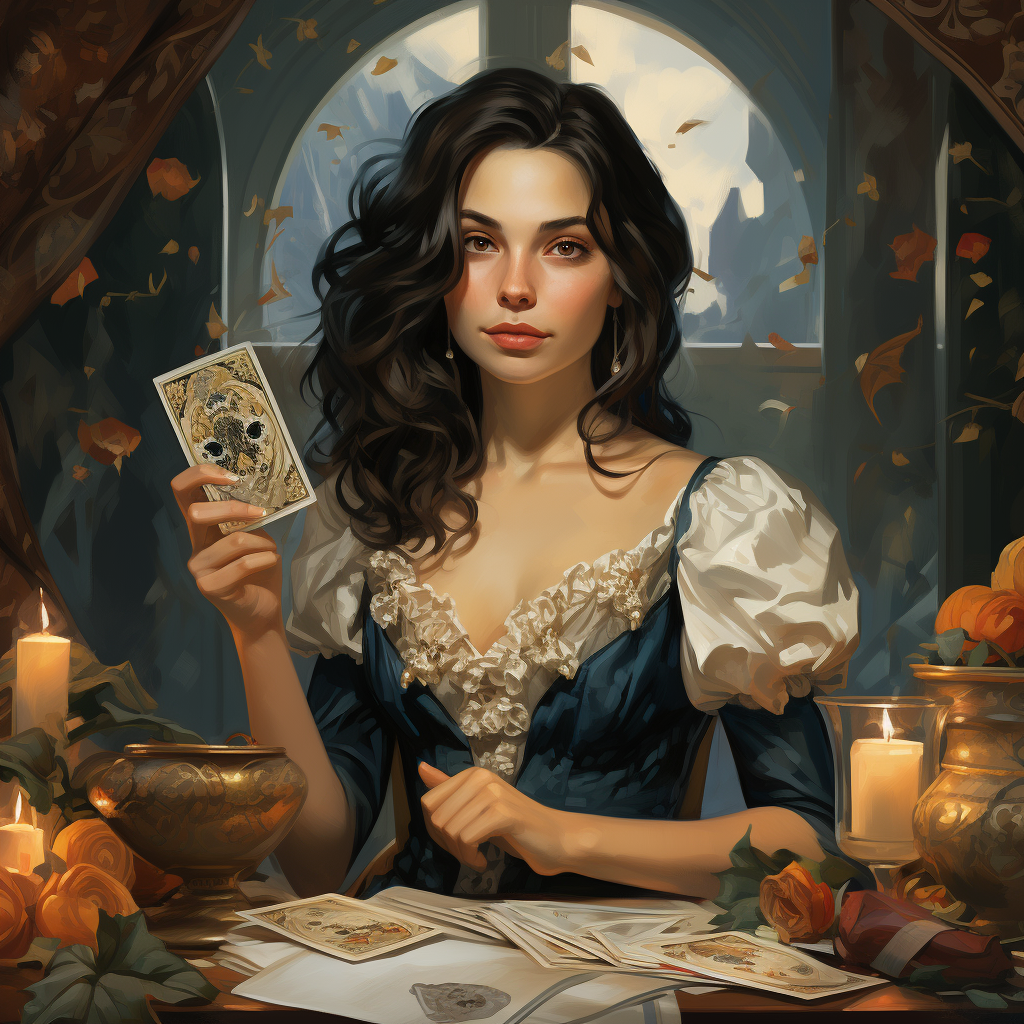
Cartomancy is a form of divination that uses cards, usually a standard deck of 52 playing cards, to gain insight, guidance, and wisdom. Here’s a brief overview:
History: Cartomancy has its roots in ancient cultures, where tarot cards were used for divination. The use of regular playing cards as a divination tool dates back to the 18th century.
How it works: A cartomancer shuffles the deck and lays out cards in a specific pattern, such as a spread. Each card is interpreted based on its numerical value, suit, and symbolism. The reader uses their intuition and knowledge of the cards to decipher the meaning behind the layout.
Types of cartomancy:
- Regular cartomancy: Uses a standard deck of 52 playing cards without any additional symbolism.
- Tarot-inspired cartomancy: Incorporates symbolism and imagery from tarot cards, but without the complex meanings associated with traditional tarot.
- Customized cartomancy: Readers create their own meanings for the cards or use pre-existing systems.
Common techniques:
- Laying out cards: Cards are arranged in a specific pattern to create a visual representation of the question or situation.
- Cutting the deck: The querent (person seeking guidance) cuts the deck at a specific point, which determines the order of the cards.
- Interpreting the cards: The reader assigns meaning to each card based on its position in the spread, relationships with other cards, and their own intuition.
Popular spreads: Some common spreads include:
- Three-card spread: Past-Present-Future
- Celtic Cross spread: A more complex spread that explores various aspects of a question
- Star spread: A simple spread that provides an overview of the situation
Benefits: Cartomancy can:
- Provide guidance: Offer insight into a situation or question
- Encourage self-reflection: Help individuals reflect on their thoughts, feelings, and actions
- Offer comfort: Provide reassurance and support during challenging times
Criticisms: Some argue that cartomancy is:
- Unreliable: Claiming that the interpretations are subjective and not scientifically proven
- Superstition: Viewed as an outdated practice lacking empirical evidence
- Manipulation: Suspected to be used for entertainment or persuasion rather than genuine guidance




 Love
Love Astrologer
 Dreams
 Life Coach
 Medium
 Numerologist
 Palm Reader
 Paranormal
 Past Life
 Tarot Reader