
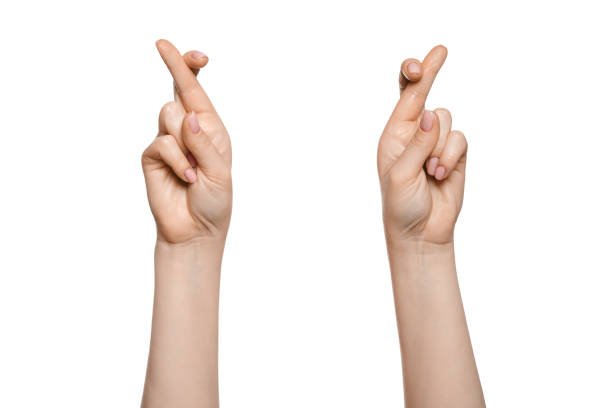
Superstitions have always played a fascinating role in human society, shaping behaviors, beliefs, and rituals across cultures. Among these, the act of crossing one’s fingers stands out as a simple yet deeply ingrained gesture, synonymous with hope and luck. This essay delves into the origins of the “crossing fingers” superstition, its cultural variations, psychological underpinnings, and its relevance in contemporary society.
The origins of crossing fingers can be traced back to ancient times, although its exact beginnings are hard to pinpoint. One widely accepted theory suggests that the gesture dates back to early Christianity when followers would cross their fingers to invoke divine protection and guidance. This gesture provided a physical representation of their faith and a secret sign among believers during times of persecution.
Another theory links the act to ancient pagan practices, where crossing fingers was believed to ward off evil spirits. In these contexts, the crossed fingers formed a protective barrier, symbolizing a connection between the earthly and spiritual realms. This idea of protection persists in modern interpretations of the gesture, as many people cross their fingers when hoping for a favorable outcome in uncertain situations.
While crossing fingers is predominantly recognized in Western cultures, variations of this superstition exist globally. In some Asian cultures, for example, a similar gesture is used but often with different meanings. In Vietnam, crossing fingers is associated with good luck and is often employed during games of chance. In contrast, some cultures interpret the cross as a symbol of deceit or dishonesty, demonstrating how the same gesture can carry divergent meanings based on cultural context.
The use of crossed fingers extends beyond mere superstition; it also appears in various forms of media and literature as a symbol of hope. From movies to literature, this gesture has become a visual shorthand for the desire for good fortune, emphasizing its pervasive influence on our collective consciousness.
The act of crossing one’s fingers can also be examined through a psychological lens. In moments of uncertainty, performing a superstitious act can provide individuals with a sense of control and comfort. This phenomenon aligns with the psychology of belief, where people tend to ascribe meaning to actions that they perceive as influencing their lives. Crossing fingers often helps alleviate anxiety or apprehension, fostering a sense of agency over uncontrollable circumstances.
Moreover, the gesture can activate a positive mindset, which can enhance overall resilience. When individuals engage in superstitious behaviors, they often feel empowered, which can positively influence their performance, whether in exams, competitions, or other high-stakes situations. This psychological aspect underscores the importance of rituals in human behavior, illustrating how belief in luck can translate into tangible outcomes.
In today’s fast-paced world, where uncertainty is a constant, superstitions like crossing fingers remain relevant. From aspiring athletes to students facing exams, many continue to rely on this gesture as a simple yet powerful emblem of hope and determination. Moreover, in an increasingly secular society, the persistence of such superstitions highlights a fundamental human need to cope with unpredictability and risk.
Additionally, the rise of social media has created new avenues for sharing these cultural practices. A photo of crossed fingers accompanying a hopeful message has become a common visual trope across platforms, reinforcing both the gesture and its associated meanings in a digital age.
Crossing fingers is more than just a superstitious gesture; it is a rich cultural symbol that bridges ancient traditions and modern psychological insights. Rooted in history and shaped by individual beliefs, this simple act encapsulates humanity’s enduring quest for hope, protection, and control over the uncertainties of life. As we navigate a world filled with unpredictability, crossing fingers serves as a reminder of our innate desire to seek good fortune and resilience in the face of adversity. In this way, the act transcends generations and cultures, serving as a timeless expression of our shared humanity.




 Love
Love Astrologer
 Dreams
 Life Coach
 Medium
 Numerologist
 Palm Reader
 Paranormal
 Past Life
 Tarot Reader