
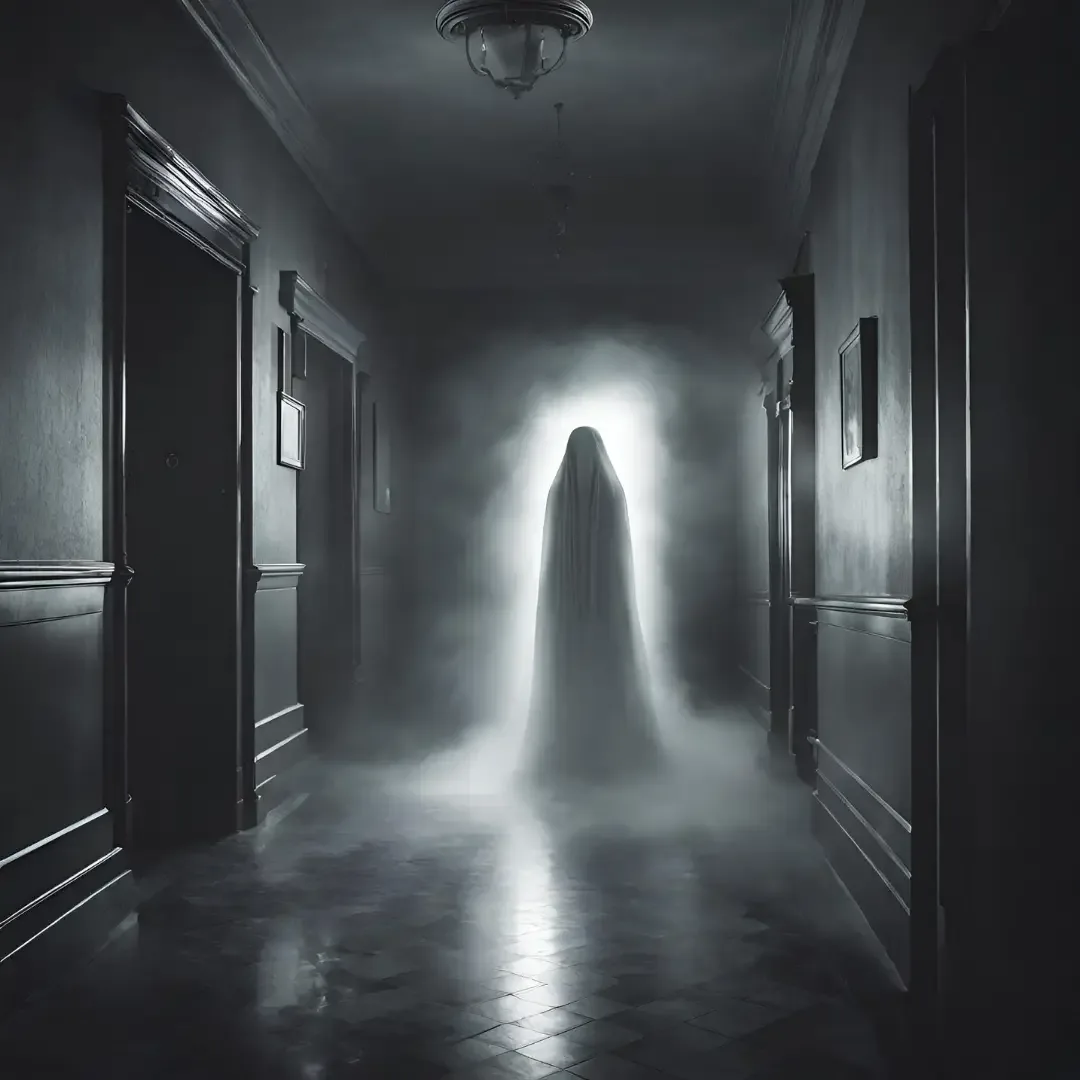
For as long as humans have existed, people have wondered what happens after death. Every culture, religion, and civilization has created stories about spirits, hauntings, souls, and worlds beyond our own. Some believe the dead move on peacefully. Others believe spirits remain connected to the living through energy, unfinished emotions, or lingering attachments. Whether viewed through religion, paranormal belief, or pure curiosity, the mystery of the afterlife continues to fascinate humanity because it touches the deepest fear and hope we all share: the possibility that death may not truly be the end.
Ghosts and spirits exist in a strange place between fear and comfort. On one hand, hauntings terrify people because they challenge the rules of reality. On the other hand, the idea that loved ones may still exist in some form can feel deeply reassuring. This emotional contradiction is part of why paranormal topics never disappear. Humans are naturally drawn toward mystery, especially mysteries involving life, death, and consciousness itself.
The Difference Between Ghosts and Spirits
Many people use the words “ghost” and “spirit” interchangeably, but spiritual traditions often describe them differently.
Ghosts are usually viewed as trapped energies or lingering presences connected to a specific place, person, or emotional event. In paranormal stories, ghosts are often associated with unfinished business, trauma, grief, anger, or sudden death. They are typically portrayed as repeating behaviors, appearing in certain locations, or trying to communicate with the living.
Spirits, however, are often described in a calmer and more evolved way. Many spiritual believers see spirits as souls that have crossed into another realm but can still occasionally visit or guide the living. Spirit communication is commonly associated with mediums, dreams, signs, or moments of strong emotional intuition.
This distinction matters because ghosts are often tied to haunting and fear, while spirits are more connected to guidance, memory, love, and spiritual connection.
Why People Believe in Ghosts
Belief in ghosts is surprisingly widespread across cultures. Stories of apparitions, unexplained noises, shadow figures, strange energy, and encounters with the dead appear almost everywhere in human history.
Some people believe ghosts are proof consciousness survives death. Others think paranormal experiences may be connected to psychological phenomena, environmental conditions, or the power of suggestion. Yet even skeptical people sometimes admit to having experiences they cannot fully explain.
Common paranormal experiences include:
- Feeling watched while alone
- Sudden cold spots
- Hearing footsteps or voices
- Seeing shadowy figures
- Objects moving unexpectedly
- Vivid dreams about deceased loved ones
- Feeling a presence during grief
Whether supernatural or psychological, these experiences feel intensely real to the people who experience them. That emotional realism is part of why ghost stories remain so powerful.
Haunted Places and Emotional Energy
Many paranormal believers think locations can hold emotional energy. Old houses, abandoned hospitals, battlefields, cemeteries, and historic buildings are often connected to haunting stories because people believe traumatic events can leave energetic “imprints.”
Some theories suggest hauntings are not intelligent spirits at all but rather emotional recordings replaying themselves under certain conditions. This idea is sometimes called a “residual haunting,” where energy from intense moments becomes trapped in a place almost like a spiritual echo.
Other paranormal theories suggest intelligent spirits can actively interact with the living through sounds, movement, dreams, or symbolic signs.
Whether real or imagined, haunted places fascinate people because they create the feeling that the past may never fully disappear.
Mediums and Spirit Communication
The idea that certain people can communicate with the dead has existed for centuries. Mediums claim to receive messages, emotions, visions, or impressions from spirits. Some describe hearing voices internally, while others rely on symbolism, emotional sensing, or intuitive flashes.
Skeptics often argue that mediumship relies on psychology, suggestion, or cold reading techniques. Believers, however, point to deeply personal experiences that feel impossible to fake.
What makes spirit communication so emotionally powerful is not necessarily the paranormal aspect itself, but the human desire for closure. People who lose loved ones often long for reassurance that death did not erase the connection entirely.
That hope is one of the strongest emotional forces behind belief in the afterlife.
The Fear of Death and the Need for Meaning
At the center of every ghost story and spiritual belief is the same question: what happens when we die?
Some religions describe heaven, reincarnation, or spiritual planes. Some spiritual traditions believe souls continue evolving after death. Others believe consciousness simply returns to the universe in another form. Science, meanwhile, still cannot fully explain consciousness itself, which leaves room for endless theories and speculation.
The fear of death is universal because humans are aware of mortality in a way few creatures seem to be. Paranormal beliefs often help people emotionally cope with that uncertainty. The idea of an afterlife creates meaning, continuity, and hope in the face of something otherwise unknowable.
Even people who do not fully believe in ghosts are often fascinated by them because the topic forces us to confront life’s greatest mystery.
Signs From the Other Side
Many people who believe in spirits also believe the dead send signs to the living. These signs are usually subtle rather than dramatic. Common examples include:
- Repeating numbers
- Sudden familiar scents
- Dreams involving deceased loved ones
- Songs appearing at meaningful moments
- Unexplained coincidences
- Feeling a loved one’s presence during emotional moments
- Animals or symbols repeatedly appearing
Skeptics call these coincidences shaped by emotional interpretation. Believers see them as spiritual communication. Either way, these experiences often bring comfort during grief and loss.
Sometimes the emotional healing matters more than proving whether the experience was objectively supernatural.
Why Ghost Stories Never Die
Ghost stories survive every generation because they combine fear, mystery, spirituality, and emotion into one powerful experience. They force people to imagine worlds beyond normal understanding. They make ordinary places feel uncertain. Most importantly, they keep alive the possibility that consciousness continues beyond physical death.
Humans are storytelling creatures, and few stories are more compelling than those involving the unknown. Ghosts represent unfinished questions. Spirits represent hope. The afterlife represents humanity’s endless search for meaning beyond mortality itself.
And perhaps that is why people remain obsessed with paranormal mysteries. Deep down, most people do not just want to know if ghosts are real.
They want to know if love, memory, and the soul can survive even after death.




 Love
Love Astrologer
 Dreams
 Life Coach
 Medium
 Numerologist
 Palm Reader
 Paranormal
 Past Life
 Tarot Reader