
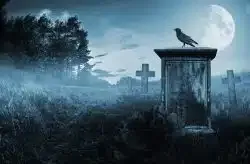
Graveyards have long been a focal point in various cultures, serving as resting places for the deceased and often reflecting the attitudes that different societies hold towards death and the afterlife. Across the globe, a multitude of superstitions and beliefs have emerged around graveyards, revealing deeper insights into how various cultures interpret mortality, fear, and the sacredness of the dead. These superstitions not only provide a glimpse into cultural heritage but also influence behaviors and traditions surrounding death and burial practices.
One prevalent superstition involves the belief that graveyards are haunted by the spirits of those buried there. This notion stems from the fear of the unknown and the idea that death may not signify an absolute end. Many cultures believe that the souls of the deceased remain tethered to their burial sites, either due to unfinished business, unresolved emotions, or a desire to protect their loved ones. As a result, individuals may refrain from visiting graveyards at night, believing that doing so could attract negative energies or even provoke the spirits of the deceased.
Another common superstition relates to the proper treatment of graves. Many cultures emphasize the importance of respecting the dead, with specific rituals designed to honor their memory. For instance, it is often considered bad luck to walk on graves, as it may disturb the resting spirits. Families may leave offerings—such as flowers, candles, or personal items—at gravesites to ensure the deceased are honored and to prevent them from becoming restless. In this sense, graveyards function not only as physical space but also as sacred ground where the lines between the living and the dead blur.
The concept of misfortune associated with graveyards is illustrated through various superstitions. For instance, some cultures believe that encountering a black cat in a graveyard can bring bad luck, while others may avoid certain colors or numbers commonly associated with death or mourning. These beliefs serve as cautionary tales, reinforcing the idea that graveyards are places of mourning and reflection rather than places of joy or celebration.
Regional variations in graveyard superstitions also highlight the rich diversity of belief systems around death. In some cultures, it is customary to hold vigils in graveyards during specific periods, such as Día de los Muertos in Mexico, where families gather to celebrate the lives of their ancestors. In contrast, in parts of Eastern Europe, graveyards may be seen as ominous places where certain rituals or protective measures are undertaken to ensure the safety of the living. These variations underscore how shared superstitions can markedly differ based on geography, history, and cultural nuances.
Moreover, graveyard superstitions are often interwoven with religious beliefs. Many faiths have specific doctrines regarding the afterlife, resurrection, and the treatment of the dead. For instance, in Christianity, beliefs in angels and demons can influence perceptions of graveyards as battlegrounds between good and evil. Similarly, in Hinduism, the concept of reincarnation informs rituals performed at cremation sites or burial grounds, as families seek to ensure the smooth transition of souls to their next life. This interrelation of spiritual beliefs and superstitions profoundly shapes how communities engage with their deceased.
graveyard superstitions serve as a fascinating lens through which to explore humanity’s intricate relationship with death and the afterlife. These beliefs reflect the universal themes of fear, respect, and the quest for understanding in the face of life’s most significant mystery—the inevitability of death. By examining these superstitions, we gain valuable insights into the diverse cultural practices that surround mourning and memorialization, enriching our understanding of what it means to honor those who have passed. Ultimately, graveyard superstitions remind us of our shared humanity, guiding us in our reflections on loss, remembrance, and the enduring connections we maintain with those who came before us.

 Love
Love Astrologer
 Dreams
 Life Coach
 Medium
 Numerologist
 Palm Reader
 Paranormal
 Past Life
 Tarot Reader