
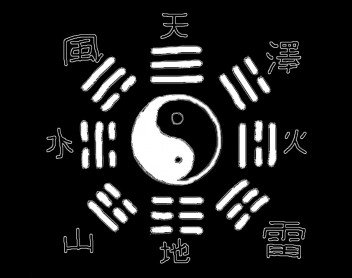
The I Ching, or “Book of Changes,” is one of the oldest Chinese classical texts, with origins tracing back over three thousand years. It is not only a significant philosophical and spiritual manuscript but also an influential cultural artifact that has permeated various aspects of Chinese civilization, including literature, art, and politics. The text serves as a divination tool and a guide to understanding the principles of change and balance in life, highlighting the dynamic interplay between opposites.
The I Ching is believed to have been written during the Western Zhou dynasty (c. 1046–771 BCE) and has undergone numerous interpretations and commentaries throughout the centuries. The traditional text consists primarily of 64 hexagrams, each comprising six lines that can be broken (yin) or solid (yang). These hexagrams serve as a symbolic representation of various situations and their underlying energetics. The historical significance of the I Ching extends beyond its content; it reflects the philosophical developments of its time, including early Confucianism and Daoism, marking an important transition from mythological to more systematic approaches to understanding the world.
At its core, the I Ching is a study of change. Its central tenet is that life is in constant flux, and by understanding these changes, individuals can better navigate their circumstances. The text emphasizes the concept of yin and yang, which represents the dualistic nature of reality. Yin, characterized by qualities such as passivity and receptivity, contrasts with yang, which embodies activity and assertiveness. The interdependence of these forces illustrates the idea that opposites exist in a state of dynamic balance.
The I Ching advocates for flexibility and adaptability, encouraging readers to align themselves with the natural flow of events. Its aphoristic wisdom often serves as a gentle reminder that wisdom lies not in rigid adherence to plans but in the ability to respond appropriately to changing circumstances. This aligns closely with Daoist philosophy, which celebrates spontaneity and the importance of living in harmony with the Dao, or the fundamental nature of the universe.
One of the most intriguing aspects of the I Ching is its use as a divination tool. When seeking guidance, individuals typically cast coins or yarrow sticks to produce a hexagram corresponding to their query. Each hexagram is then interpreted in light of its textual commentary, offering insights into potential outcomes and strategies for action. The process emphasizes intuition and contemplation, requiring practitioners to engage deeply with their inner thoughts and feelings.
The interpretations provided by the I Ching are multifaceted and often poetic, allowing for a range of insights applicable to various life situations. This ambiguity is intentional, reflecting the complexity of human experiences. Practitioners are encouraged to meditate on the hexagrams, revealing deeper truths about their lives and the world around them. In this sense, the I Ching acts not just as a tool for divination but as a source of profound philosophical reflection.
The I Ching’s influence extends well beyond its original context. It has inspired a wide array of interpretations across disciplines, from psychology to art. Notable figures, including Carl Jung, have engaged with the text, viewing it as a symbol of the collective unconscious and a tool for self-exploration. In modern times, its principles have found applications in various fields, including business and management, where adaptability and strategic foresight are prized.
Moreover, the I Ching represents a bridge between Eastern and Western philosophical traditions, fostering cross-cultural dialogues about existence, morality, and the nature of knowledge. Its enduring popularity across cultures speaks to its universal themes of change, balance, and interconnectedness.
The I Ching is a remarkable synthesis of philosophy, art, and divination that offers profound insights into the nature of change and the human experience. Its teachings remind us that life is a continuous process of transformation and that understanding this fluidity can empower us to navigate our journeys with wisdom and grace. As we engage with the I Ching, we are invited into a dialogue with our own inner selves, the world around us, and the timeless patterns that shape our lives. Through its hexagrams, the I Ching remains a guiding light for those seeking clarity amidst the uncertainties of existence.




 Love
Love Astrologer
 Dreams
 Life Coach
 Medium
 Numerologist
 Palm Reader
 Paranormal
 Past Life
 Tarot Reader