
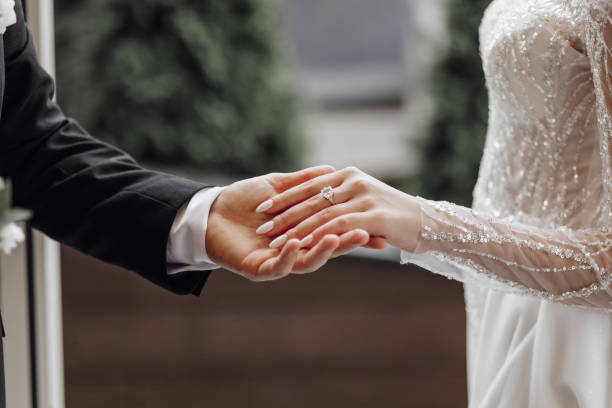
Marriage may be about love, commitment, and choosing one person to share your life with, but according to superstition, getting to “happily ever after” requires a surprising amount of luck. For centuries, people have believed that everything from the weather on your wedding day to the way you cut the cake could predict the future of your marriage.
Some marriage superstitions are romantic. Others are downright strange. And a few make you wonder how anyone ever managed to get married without accidentally cursing themselves before the honeymoon even started.
One of the best-known wedding superstitions is the belief that the groom should not see the bride before the ceremony. Today, couples may follow the tradition simply because they enjoy the suspense and excitement of seeing each other at the altar. Historically, however, the tradition had much less romantic origins. In arranged marriages, families sometimes worried that a groom who saw his bride beforehand might change his mind. Over time, the custom became wrapped in superstition seeing each other before the ceremony supposedly invited bad luck into the marriage.
Then there is the famous saying “Something old, something new, something borrowed, something blue.” Each item supposedly carries a different type of energy into the marriage. Something old represents continuity with the past and family. Something new symbolizes the life the couple is beginning together. Something borrowed traditionally represents borrowed happiness or good fortune, particularly when it comes from someone in a happy marriage. Something blue symbolizes faithfulness, love, and loyalty.
Even the wedding dress has its own collection of superstitions. White eventually became associated with bridal tradition and purity in Western culture, while other colors gathered their own supposed meanings. In some old folklore, certain wedding-dress colors were believed to predict happiness, regret, wealth, or misfortune. Of course, modern brides wear everything from white and champagne to black, pink, red, and blue without allowing an old rhyme to determine their romantic future.
Rain on your wedding day is another interesting one. You might assume rain would be considered unlucky, especially when it ruins hairstyles, outdoor photographs, and carefully planned ceremonies. Yet in several traditions, rain is actually associated with fertility, cleansing, renewal, and a marriage that will be difficult to “untie.” So when the clouds open right before the ceremony, superstition says you might want to stop complaining and consider yourself lucky.
Wedding rings carry plenty of symbolism too. A ring has no beginning and no end, making the circle a natural symbol of eternity. Historically, different cultures have attached different meanings to the finger on which the ring is worn. One enduring romantic belief held that a special vein connected the ring finger directly to the heart. Anatomically, that idea isn’t accurate, but romantically, it certainly survived.
Dropping the wedding ring during the ceremony, however, has traditionally been considered less fortunate. Depending on the folklore, it could predict trouble or unhappiness in the marriage. If it happens at your wedding, though, blaming shaky hands is probably much more reasonable than assuming the universe has filed an objection to your relationship.
Then we have the bouquet toss. According to tradition, the unmarried person who catches the bride’s bouquet will be the next one to marry. The same basic idea appears in the garter toss, although that tradition has become less popular with some modern couples. Apparently weddings were once considered an excellent opportunity to publicly determine who needed to get married next.
Wedding cake comes with its own magical reputation. Cutting the cake together symbolizes cooperation and beginning married life as partners. Feeding each other cake can represent caring and providing for one another although smashing it into your new spouse’s face probably adds an entirely different interpretation.
Some older traditions even encouraged unmarried guests to take pieces of wedding cake home. In certain folklore, placing wedding cake beneath your pillow was supposed to make you dream about your future spouse. Whether it produced prophetic dreams or simply a pillow full of frosting is another question.
Carrying the bride over the threshold is another famous marriage superstition. Its origins are tangled in ancient customs and beliefs about spirits, vulnerability, and bad luck entering a new home. In some versions, allowing the bride to trip while entering the marital home was considered unlucky, so carrying her eliminated the risk. Today it survives mostly as a romantic gesture assuming both people actually want to attempt it.
Even the day you marry has supposedly mattered. Different cultures have considered particular days, months, seasons, and even phases of the moon more fortunate than others. Some traditions favored certain months for prosperity or fertility, while others warned couples away from supposedly unlucky dates. Modern couples may still choose dates because of numerology, astrology, family significance, or simply because the venue happens to be available.
And that may be the most fascinating thing about marriage superstitions they reveal how seriously humans have always taken love.
Marriage is a huge leap into an unknown future. Nobody standing at the altar knows exactly what the next ten, twenty, or fifty years will bring. Superstitions gave people little rituals that made an unpredictable future feel slightly more manageable. Carry this. Wear that. Avoid this date. Don’t see each other beforehand. Hope for sunshine or apparently rain. Follow the rules, and perhaps fate will smile upon you.
But there is one thing almost every marriage superstition accidentally teaches us. People desperately want love to last.
That’s why generations have created rituals for protecting it, blessing it, predicting it, and attracting good fortune around it. You don’t have to believe that catching flowers determines your romantic destiny or that rain means your marriage has received a spiritual blessing. The traditions can simply be fun reminders that humans have always searched for signs when something matters deeply to them.
So wear the blue item. Borrow the earrings. Toss the bouquet. Dance under the rain clouds. Check your astrology if it makes the day more magical. Just remember that the strongest “good luck charm” in a marriage probably isn’t hiding inside an old superstition. It’s two people who continue choosing each other long after the wedding is over.



 Love
Love Astrologer
 Dreams
 Life Coach
 Medium
 Numerologist
 Palm Reader
 Paranormal
 Past Life
 Tarot Reader