
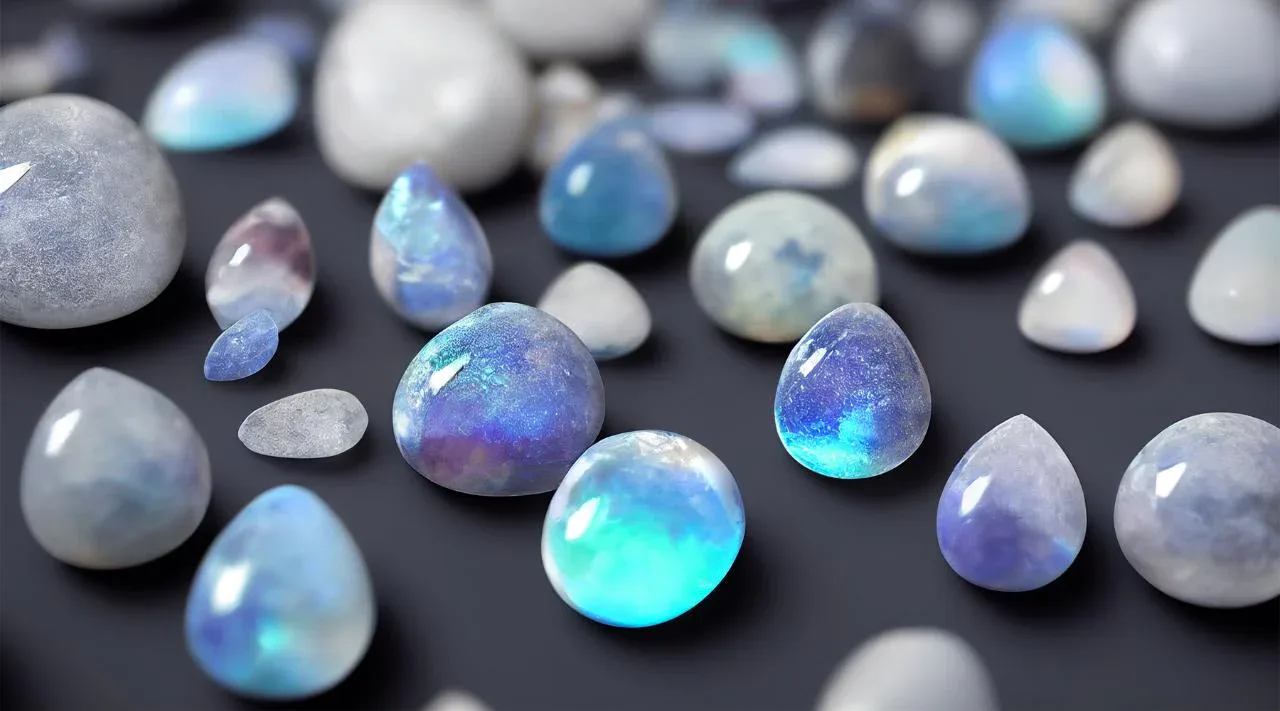
Moonstone, a captivating gem known for its ethereal glow and mesmerizing play of light, has fascinated humanity for centuries. With its unique optical phenomena, often referred to as adularescence, and rich historical significance, moonstone continues to hold a special place in the world of gemstones and jewelry.
Origins and Composition
Moonstone is a member of the feldspar group of minerals, specifically comprised of two different types: albite and orthoclase. The gem’s characteristic glow is due to the layering of these minerals, which scatters light that hits the surface of the stone. This interplay of light creates a shimmering effect reminiscent of moonlight reflecting off water, which is how the stone got its name.
Moonstone is primarily found in locations such as Sri Lanka, India, Madagascar, and the United States. Each source can produce stones with distinct qualities, with Sri Lankan moonstones often displaying a bright blue sheen, while Indian varieties may exhibit a more subdued, milky luminescence. The value of a moonstone can vary significantly based on its body color, clarity, and the intensity of its adularescence.
Historical Significance
Moonstone has a rich tapestry of lore woven through various cultures. In ancient Rome, it was believed to be formed from the rays of the moon, embodying lunar deities and symbolizing intuition and emotional balance. Ancient Hindus revered moonstone as a sacred stone, associating it with the moon god, Chandra. It was thought to bring good fortune and promote harmony in relationships.
During the Art Nouveau movement in the late 19th and early 20th centuries, moonstone became increasingly popular among jewelers and artists. Its mystical qualities and soft glow were often employed in jewelry design to convey a sense of romance and otherworldliness. Renowned jewelers such as René Lalique and Georges Fouquet embraced moonstone, crafting exquisite pieces that showcased the gem’s unique beauty.
Modern Uses and Healing Properties
In contemporary times, moonstone has remained a beloved gemstone in jewelry, often featured in rings, necklaces, earrings, and bracelets. Its gentle sheen and variety of colors make it a versatile choice suitable for all styles, from bohemian to classic. Due to its aesthetic appeal, moonstone is particularly favored for engagement rings and other meaningful gifts, symbolizing love and new beginnings.
Beyond its beauty, moonstone is also associated with a variety of metaphysical properties. It is often considered a stone of intuition, encouraging individuals to tap into their inner wisdom and make decisions based on instinct rather than logic. Many believe that moonstone can enhance emotional stability and balance, particularly during times of change or uncertainty. It is also said to promote restful sleep and stimulate creativity.
Care and Maintenance
Caring for moonstone requires a gentle touch. Due to its relatively soft nature (with a Mohs hardness of 6 to 6.5), moonstone is vulnerable to scratches and damage. To maintain its beauty, it is advisable to clean moonstone jewelry with a soft, damp cloth and avoid exposure to harsh chemicals or extreme temperatures. Storing moonstone pieces away from other jewelry can help prevent accidental scratches.
Moonstone, with its delicate beauty and enchanting glow, is much more than just a gemstone. It is a symbol of intuition, love, and emotional balance, woven into the fabric of history and culture. From its origins deep within the Earth to its modern-day significance in jewelry, moonstone continues to captivate hearts and minds. Whether worn as a personal adornment or cherished as a gift, moonstone remains a timeless gem that resonates with the soul’s deepest yearnings for connection and harmony.



 Love
Love Astrologer
 Dreams
 Life Coach
 Medium
 Numerologist
 Palm Reader
 Paranormal
 Past Life
 Tarot Reader