
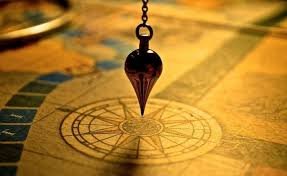
Pendulum dowsing, also known as divining or radiesthesia, is a practice that has been used for centuries to seek answers to questions or gain insight into various aspects of life. It involves the use of a weighted object, typically a crystal or metal pendulum, which is suspended from a string or chain and held over a specific object or area of interest. The pendulum then moves in response to the energy or vibrations present, providing guidance or information to the user.
The origins of pendulum dowsing can be traced back to ancient civilizations such as the Egyptians and the Chinese, who used it for various purposes including finding water sources, locating minerals, and even predicting the future. It was believed that the pendulum acted as a conduit between the physical and spiritual realms, allowing the user to tap into the universal energy or subconscious mind to access hidden knowledge.
In modern times, pendulum dowsing has gained popularity as a tool for personal growth, self-discovery, and spiritual development. It is often used to gain insight into one’s own emotions, thoughts, and beliefs, as well as to seek guidance on important life decisions. Many people also use pendulum dowsing to connect with their intuition or higher self, believing that the pendulum can provide accurate and unbiased answers to their questions.
The process of pendulum dowsing involves first establishing a connection with the pendulum. This is done by holding it in one’s hand and asking a series of yes or no questions, observing the direction in which the pendulum swings or rotates in response. Typically, a clockwise rotation indicates a positive or affirmative answer, while a counterclockwise rotation indicates a negative or negative answer. Once the connection is established, the user can then ask more specific questions or seek guidance on a particular issue.
Critics of pendulum dowsing argue that it is nothing more than a form of pseudoscience or superstition, with no scientific evidence to support its claims. They argue that any movement of the pendulum is simply a result of unconscious muscle movements or the user’s own biases and expectations. Skeptics also point out that the pendulum’s movements can be easily influenced by external factors such as air currents or the user’s own hand movements.
However, proponents of pendulum dowsing argue that it is a valuable tool for self-reflection and personal growth, regardless of its scientific validity. They believe that the pendulum acts as a mirror, reflecting the user’s own subconscious thoughts and desires. By using the pendulum as a tool for self-inquiry, they argue, individuals can gain a deeper understanding of themselves and make more informed decisions in their lives.
In conclusion, pendulum dowsing is a practice that has been used for centuries to seek answers and gain insight into various aspects of life. While its scientific validity may be questioned, many people find value in using the pendulum as a tool for self-reflection and personal growth. Whether one believes in its mystical properties or not, pendulum dowsing remains a fascinating and intriguing practice that continues to be used by individuals seeking guidance and understanding in their lives.




 Love
Love Astrologer
 Dreams
 Life Coach
 Medium
 Numerologist
 Palm Reader
 Paranormal
 Past Life
 Tarot Reader