
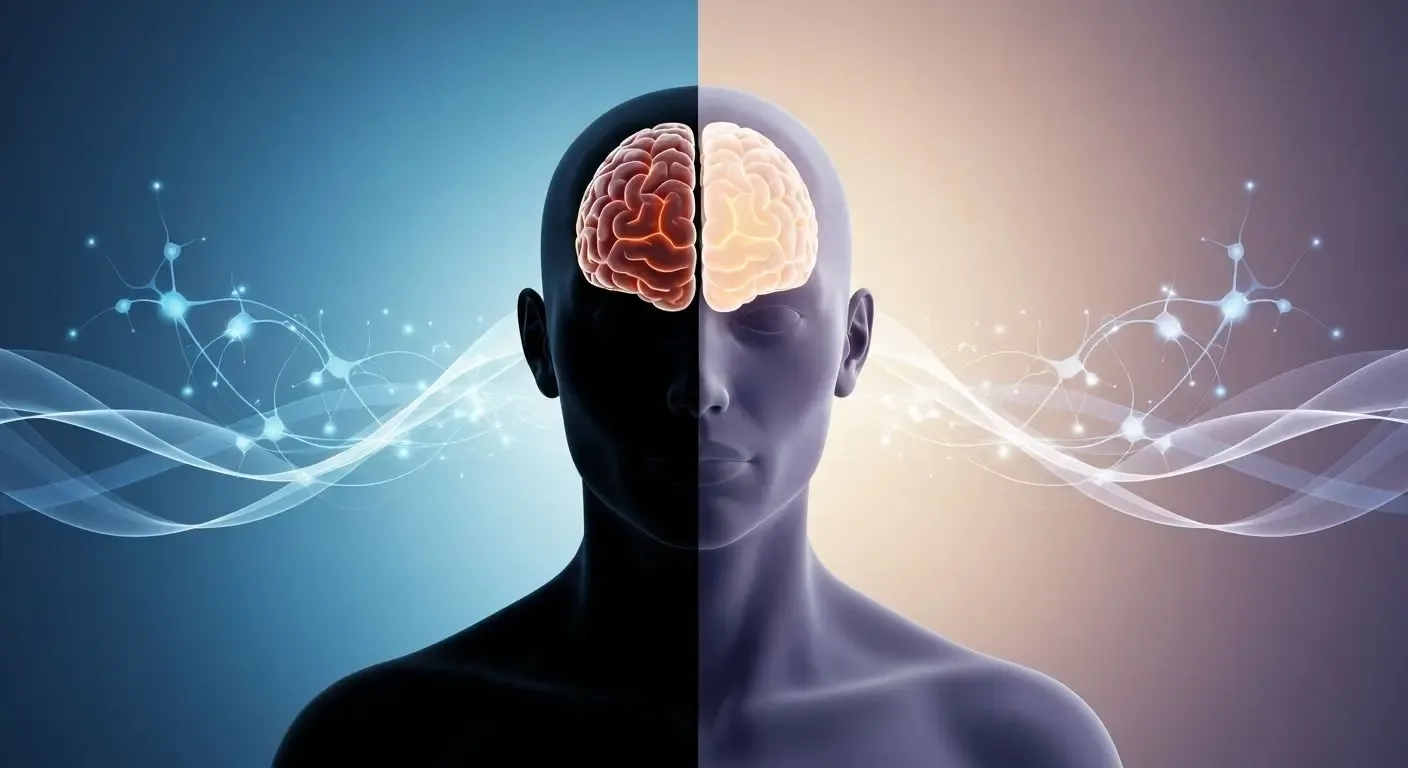
For a long time, I believed positive energy was something certain people were simply born with. They walked into rooms lighter. They handled stress better. They seemed unshaken by setbacks. I assumed it was personality a natural optimism wired into their DNA. What I eventually learned is that positive energy is not a personality trait. It is a trained mental pattern.
The brain is constantly rewiring itself based on repetition. Every thought you revisit, every fear you rehearse, every belief you reinforce becomes a strengthened neural pathway. Over time, those pathways feel automatic. They feel like “who you are.” But often, they are just well-practiced habits of thought.
If someone has spent years expecting disappointment, their brain becomes efficient at spotting it. If someone frequently criticizes themselves, that voice becomes fast and familiar. The mind does not judge whether a thought is helpfulit simply builds around what is repeated.
Reprogramming begins with awareness. You have to observe your default settings. What does your mind do when it is idle? Does it replay old conversations? Predict worst-case scenarios? Compare your progress to everyone else’s? These patterns often run quietly in the background, shaping mood and energy without permission. The moment you notice them, however, you create distance. And in that distance lies choice.
Positive energy does not come from forcing cheerful thoughts over painful ones. It comes from redirecting with balance. Instead of telling yourself, “Everything is amazing,” you might shift from “I always fail” to “I am still learning.” This kind of grounded reframing feels believable, and believability is what the brain responds to. When thoughts feel realistic, they are easier to repeat. And repetition is what builds new wiring.
There is also a biological side to this process that cannot be ignored. A dysregulated nervous system makes positivity nearly impossible. When the body feels stressed, exhausted, or overstimulated, the brain defaults to scanning for danger. No amount of affirmations can override chronic stress. Sleep, movement, deep breathing, sunlight, and quiet moments are not luxuries; they are foundational resets. A calm body creates space for a calmer mind.
Attention plays a powerful role as well. The brain strengthens what it repeatedly looks for. If you habitually focus on what went wrong, your perception narrows around problems. If you intentionally notice small wins a task completed, a moment of patience, a challenge handled better than before you begin training your mind to recognize progress. Over time, it becomes easier to see what is working instead of only what is lacking.
Reprogramming also requires responsibility. Rumination drains energy because it signals unsolved threat. Action, even small action, signals capability. When you shift from asking “Why does this always happen to me?” to “What is one step I can take next?” you move from helplessness to agency. Agency builds confidence. Confidence fuels steadier, more positive energy.
The process is gradual. Old patterns may still surface. Some days will feel lighter than others. But every repeated balanced thought, every regulated breath, every small win acknowledged is a vote for a new internal environment.
Positive energy is not constant happiness. It is resilience. It is the ability to recover more quickly. It is the quiet confidence that challenges do not define you.
Your brain is always listening to you. It is always adapting to the story you repeat. Reprogramming it is less about becoming someone new and more about consciously choosing which patterns deserve to grow. And the beautiful truth is this the brain is ready to change the moment you begin teaching it something different.




 Love
Love Astrologer
 Dreams
 Life Coach
 Medium
 Numerologist
 Palm Reader
 Paranormal
 Past Life
 Tarot Reader