
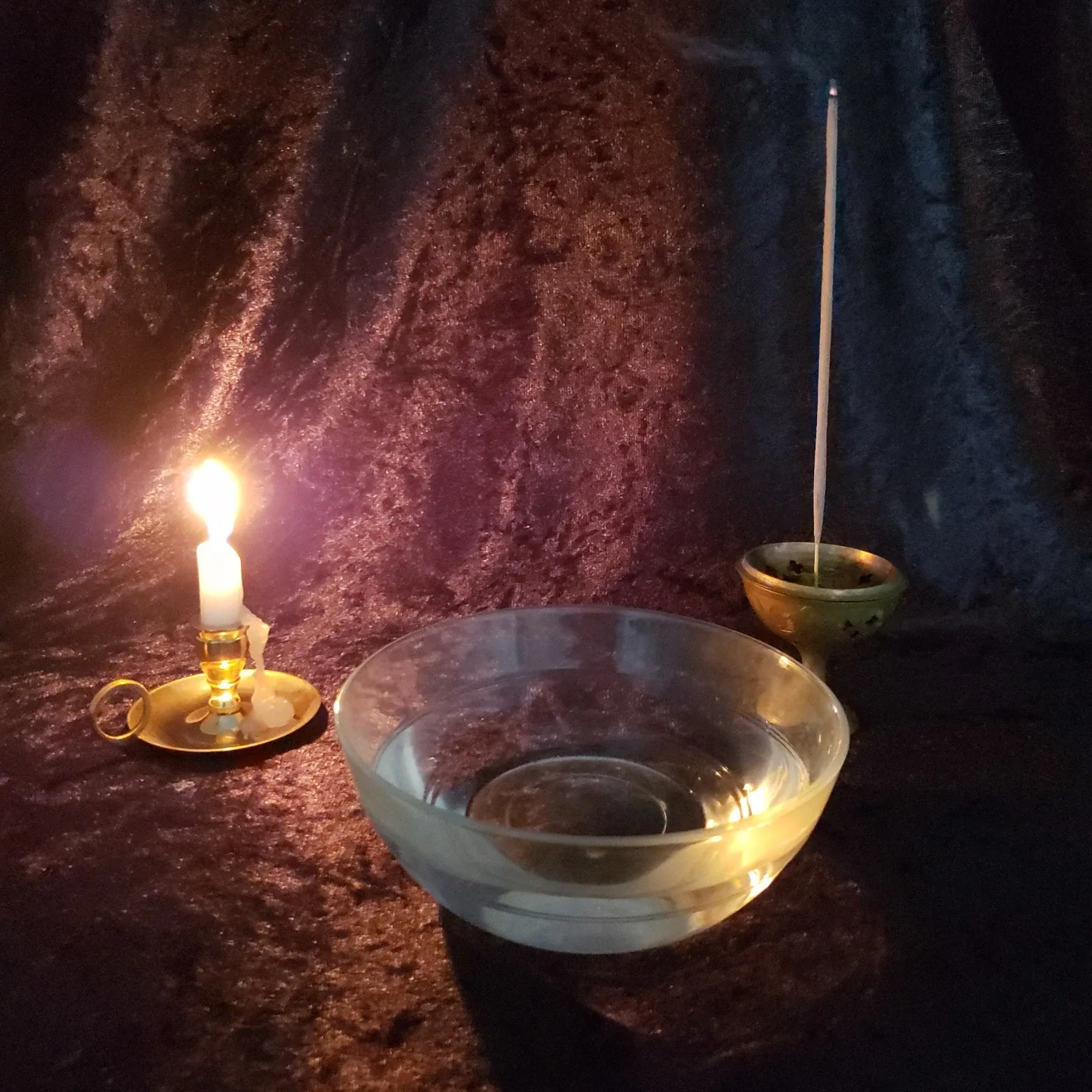
The roots of scrying can be traced across various cultures and epochs. Ancient civilizations—including the Greeks, Romans, Egyptians, and Chinese—used this technique for divinatory purposes. The Egyptians, for example, practiced crystal gazing in the context of their religious rituals, while in Greek culture, scrying was often linked to the Oracle of Delphi. The tools of the trade have varied over time; early practitioners used water-filled bowls or crystals, while modern-day scryers may employ mirrors, foggy glass, or even polished metals.
The process of scrying generally involves a few key steps: preparation, focus, and interpretation. In preparation, the scryer often engages in a ritualistic cleansing of the chosen divination tool and creates an environment conducive to concentration—dim lighting, a quiet setting, and perhaps the use of incense or candles.
During the focusing phase, the scryer gazes into the reflective surface, intentionally allowing their mind to enter a trance-like state. This state can be achieved through meditation, deep breathing, or repetitive chants. As the scryer gazes, images or visions may begin to form, sometimes taking on symbolic or metaphorical meaning. This is where the interpretation comes into play; the scryer must discern the significance of what they perceive, which can be subjective and deeply personal.
From a psychological perspective, scrying may represent an exploration of the subconscious mind. The images and feelings that arise during the practice can reflect the scryer’s current emotional state, unresolved issues, or hopes and fears. This introspective quality makes scrying not only a tool for divination but also a means of self-reflection and personal insight.
The phenomenon of pareidolia—the mind’s tendency to perceive familiar patterns in random stimuli—can also be at play during scrying. As a scryer gazes into the reflective surface, they might observe shapes or forms that resonate with their personal experiences, leading to interpretations that feel significant. Thus, the scrying experience is highly subjective and can vary widely from individual to individual.
In today’s world, scrying has seen a resurgence, particularly within the context of modern witchcraft, Neopaganism, and New Age spirituality. Practitioners may combine scrying with other methods of divination, such as tarot or astrology, to enhance their readings. Social media platforms have also facilitated a growing community of scryers, where individuals share their experiences, techniques, and interpretations.
Despite its mystical reputation, scrying can be embraced as a creative practice. Many contemporary artists and writers find inspiration in the visuals stirred by their scrying sessions, viewing the practice as a conduit for imaginative expression rather than solely a means of predicting the future.
Scrying remains a compelling practice that invites exploration into the depths of human consciousness, symbolism, and intuition. Regardless of one’s beliefs about the supernatural, the act of looking inward and interpreting the subconscious mind can yield significant insights into personal growth and understanding. As individuals continue to engage with scrying, they not only participate in a time-honored tradition but also forge a deeper connection with themselves, their emotions, and their creative impulses. Scrying, thus, is not just about seeking knowledge of what lies ahead, but rather an invitation to delve into the mysteries of the self.




 Love
Love Astrologer
 Dreams
 Life Coach
 Medium
 Numerologist
 Palm Reader
 Paranormal
 Past Life
 Tarot Reader