
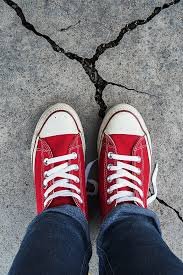
“Step on a crack, break your mother’s back” is a rhyme passed down for generations, embedding itself in childhood games and cultural memory. While often dismissed as a harmless superstition, its persistence raises questions about the deeper human need to find meaning in randomness. This is the same need that fuels belief in psychics, astrology, and other paranormal phenomena. So what happens when we step on a crack? According to physics: nothing. But according to belief systems particularly those involving the psychic or spiritual realm the answer may be more complex.
Psychics claim to perceive hidden truths, energies, or future events. While scientific evidence supporting psychic ability is lacking, many people continue to consult psychics for guidance. Why? Because like superstitions, psychic beliefs offer comfort, structure, and perceived control in an uncertain world. Stepping on a crack may symbolize more than a sidewalk game to someone who believes in energy or karmic consequences, it could represent a disruption in spiritual balance.
Some psychics might interpret such actions symbolically. For instance, stepping on a crack could be read as “crossing a boundary,” “breaking with tradition,” or “causing ripple effects in your energetic field.” These interpretations depend more on intuitive association than science, but they resonate emotionally with many people.
Both superstitions and psychic beliefs also share a connection to intuition and fear. Children avoid cracks not necessarily because they believe in the rhyme, but because the idea plants a seed of anxiety. Similarly, people visit psychics not just for answers, but because they fear the unknown. In both cases, behavior is guided by belief, not evidence yet the impact on actions and emotions is very real.
Interestingly, psychology explains this through concepts like confirmation bias and magical thinking the idea that unrelated events can somehow be connected. If a child steps on a crack and later their mother complains of a sore back, the connection feels meaningful, even if it’s purely coincidental. Psychics often operate in this same emotional space, where patterns are found in randomness.
In conclusion, the superstition of stepping on a crack and the belief in psychics both stem from the same human desire: to understand and influence the world around us. While science may not support the literal truth of either, their power lies in the mind — and in how belief shapes perception. Whether stepping on a sidewalk or seeking spiritual insight, what we believe can be just as powerful as what we know.




 Love
Love Astrologer
 Dreams
 Life Coach
 Medium
 Numerologist
 Palm Reader
 Paranormal
 Past Life
 Tarot Reader