
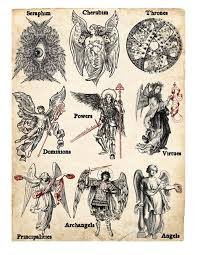
The concept of an angel hierarchy is often derived from religious, particularly Christian, texts and traditions, as well as from various philosophical and mystical teachings. This hierarchy categorizes angels into different ranks or choirs based on their roles, functions, and closeness to the divine. The most commonly referenced hierarchy is attributed to Pseudo-Dionysius the Areopagite, a Christian theologian and philosopher of the late 5th to early 6th century, in his work “The Celestial Hierarchy.”
The Hierarchical Structure of Angels
Dionysius categorized angels into three groups, each with three choirs, making a total of nine distinct types of angels. Each group reflects a different aspect of divine interaction with the world.
First Sphere: Closest to God
- Seraphim: Often depicted as the highest order of angels, Seraphim are characterized by their fiery love for God. They are seen as the guardians of the Divine Throne, constantly praising and worshiping God.
- Cherubim: Usually considered second in rank, Cherubim possess profound knowledge and insight. They are often associated with wisdom, enlightenment, and the protection of sacred things.
- ** Thrones**: These angels are associated with divine justice and authority. They serve as instruments of God’s will and are seen as representing the strength of God’s decisions and governance.
Second Sphere: Heavenly Rulers
- Dominions: These angels oversee lower choirs and are responsible for the administration of the cosmos. They carry out God’s orders and manage spiritual hierarchies.
- Virtues: Known for their role in bestowing divine grace, the Virtues are associated with miracles and divine powers. They inspire humanity towards goodness and fulfill God’s will regarding creation.
- Powers: The Powers are often seen as warrior angels, defending against evil spirits. They maintain cosmic order and are guardians of humanity’s free will.
Third Sphere: Earthly Messengers
- Principalities: Guardians of nations and rulers, Principalities direct the exercise of power on Earth. They inspire leaders to act justly and uphold divine laws.
- Archangels: These angels hold significant roles in delivering God’s important messages. Michael, Gabriel, and Raphael are well-known archangels, each with specific duties. Michael serves as a protector, Gabriel as a messenger, and Raphael as a healer.
- Angels: The lowest choir, often referred to simply as “angels,” these beings are personal guardians to humans, offering guidance and support in daily life. They are the most accessible and frequently invoked by believers.
Theological and Cultural Significance
The angel hierarchy serves several purposes in theological discourse and cultural practices:
- Understanding of Divine Order: It provides a framework for understanding how divine influence permeates the world, suggesting a structured universe led by celestial beings.
- Moral Guidance: The hierarchy emphasizes the role of angels in guiding humanity towards moral choices and divine alignment, reinforcing the belief in a protective and interactive spiritual realm.
- Cultural Expressions: In art, literature, and popular culture, the depiction of angels often draws upon these rankings, influencing portrayals in religious texts, paintings, and even modern media.
The angel hierarchy, as described by Pseudo-Dionysius and later interpretations, reflects the complexities of spiritual belief and the desire to understand the divine realm. This structured classification not only enriches theological understanding but also provides believers with a sense of connection to the celestial, reinforcing the idea that a divine order exists beyond human perception. Through their different roles and attributes, angels symbolize the divine’s will and guidance while serving as reminders of the spiritual dimensions of existence.



 Love
Love Astrologer
 Dreams
 Life Coach
 Medium
 Numerologist
 Palm Reader
 Paranormal
 Past Life
 Tarot Reader