

Introduction: The concept of an afterlife has fascinated and perplexed humanity throughout history. The question of whether there is an afterlife remains one of the most profound and elusive mysteries of existence. It encompasses philosophical inquiries, religious doctrines, and personal beliefs. This essay delves into the various perspectives surrounding the existence of an afterlife, acknowledging both religious and secular viewpoints, while recognizing the inherent complexity and lack of definitive evidence on the subject.
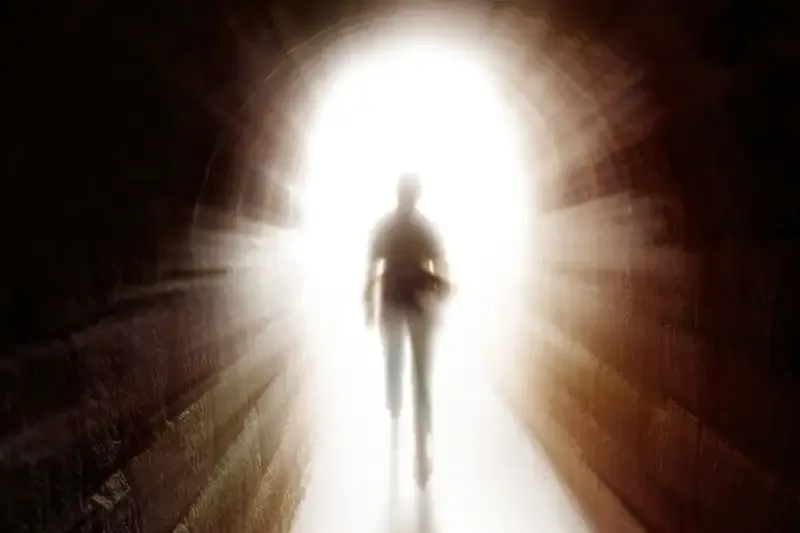
Religious Perspectives: Religious traditions across the world often uphold the belief in an afterlife. These beliefs provide solace, hope, and guidance to individuals seeking to understand the purpose and meaning of life beyond the confines of mortality. For example, in Christianity, the concept of heaven and hell is central, suggesting that one’s actions in this life determine their eternal destiny. Similarly, Islamic teachings describe an afterlife in which individuals are rewarded or punished based on their deeds. Other religions, such as Hinduism and Buddhism, propose the idea of reincarnation, where the soul takes on new forms in successive lives. These religious beliefs offer comfort and moral frameworks for adherents, providing answers to questions about justice, accountability, and transcendence.
Philosophical Considerations: Beyond religious perspectives, philosophical inquiries into the afterlife are multifaceted. Some philosophers argue that the existence of an afterlife is incompatible with reason and empirical evidence. They emphasize that consciousness arises from physical processes in the brain, and when the body ceases to function, consciousness also ends. From this standpoint, an afterlife appears implausible, as it necessitates the continuation of consciousness beyond biological death. However, others argue that consciousness might be more complex than our current understanding suggests, leaving room for the possibility of an afterlife. Philosophical debates explore notions of identity, personal continuity, and the nature of the self, contemplating whether consciousness can exist independently of the physical body.

Secular Perspectives: Secular perspectives on the afterlife often approach the subject from a rational and scientific standpoint. As science primarily focuses on empirical observation and testable hypotheses, the afterlife lies beyond its purview. Science cannot definitively prove or disprove the existence of an afterlife, as it operates within the realm of the natural world and physical phenomena. Consequently, secular viewpoints tend to prioritize evidence-based reasoning and the absence of empirical evidence supporting an afterlife. Skepticism and agnosticism may prevail, acknowledging the limits of human knowledge while withholding absolute conclusions.
Personal Beliefs and Reflections: Individuals hold a vast array of personal beliefs regarding the afterlife. Some find comfort and reassurance in religious teachings, embracing the notion of an afterlife as an essential part of their spiritual framework. Others adopt agnosticism, acknowledging the inherent uncertainty surrounding the subject, and choose to focus on the present life rather than pondering the unknown. For some, the absence of concrete evidence may lead to atheistic or nihilistic perspectives, emphasizing the significance of embracing mortality and finding meaning within finite existence. Personal experiences, cultural influences, and individual journeys shape these beliefs, highlighting the complexity and deeply personal nature of one’s stance on the afterlife.
Conclusion: The question of whether there is an afterlife remains a topic of contemplation, discussion, and debate that transcends cultures, religions, and philosophical frameworks. While religious beliefs offer diverse interpretations of an afterlife, philosophical and secular perspectives emphasize the limitations of empirical evidence and rational inquiry. Ultimately, beliefs regarding the afterlife are deeply personal, reflecting individual journeys, values, and cultural influences. In the absence of conclusive evidence, humans continue to grapple with the mystery of the afterlife, finding solace, guidance, and inspiration in their chosen beliefs and philosophies.




 Love
Love Astrologer
 Dreams
 Life Coach
 Medium
 Numerologist
 Palm Reader
 Paranormal
 Past Life
 Tarot Reader