
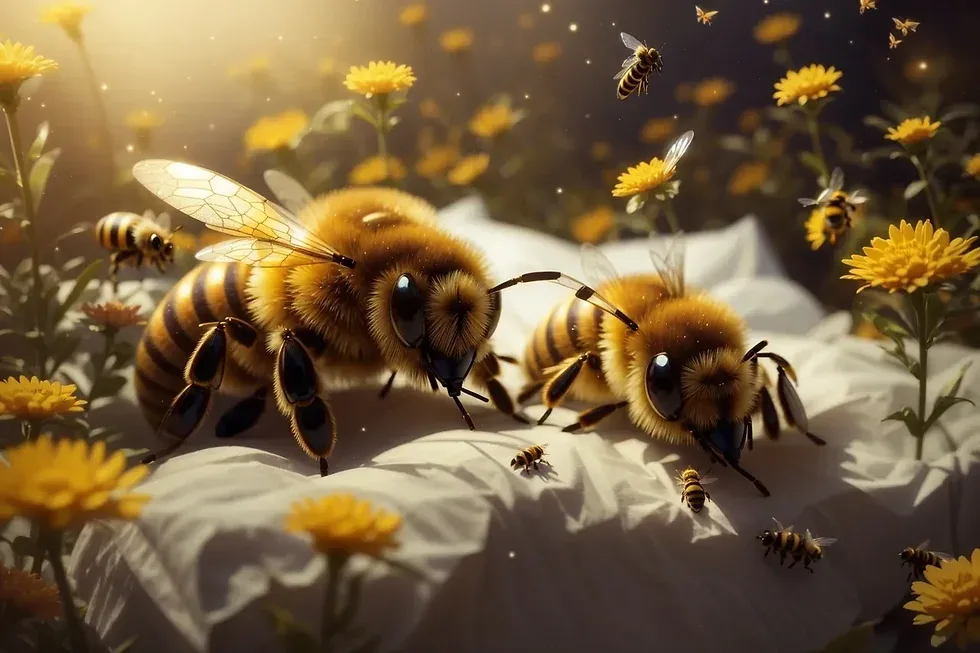
Dreams have long fascinated humanity, inspiring countless myths, stories, and scientific inquiries into their nature and significance. While much of the research on dreams has focused on humans, there is growing interest in understanding the dreamlike experiences of other species, including bees. Although bees do not sleep in the same way humans do, they engage in a process of rest that may hold intriguing implications for their cognitive capabilities and behaviors. This essay explores the concept of “bee dreams,” examining the potential parallels to human dreaming and the implications for our understanding of these remarkable insects.
Understanding Bee Rest Patterns
Bees, particularly honeybees, exhibit a unique form of rest that is crucial for their survival and overall functioning. Unlike humans, bees do not experience REM (rapid eye movement) sleep, which is typically associated with vivid dreaming. However, they do enter periods of inactivity or quiescence, during which their metabolic rates decrease, and they become less responsive to external stimuli. Observations of these rest states suggest that bees may engage in a form of mental processing akin to dreaming.
Research indicates that bees can remember the locations of flowers and other important landmarks in their environment, as well as social interactions within their colonies. During their quiescent periods, it is possible that bees mentally rehearse and consolidate these memories. This cognitive processing could enhance their foraging efficiency and communication with fellow hive members, ultimately improving their chances of survival.
The Role of Memory in Bee Behavior
Memory plays a vital role in the behavior of bees. They utilize their remarkable spatial memory to navigate complex environments and locate resources. A study conducted on honeybees demonstrated that their ability to remember specific scents and locations aids them in efficiently gathering nectar and pollen. This memory consolidation may be linked to their rest periods, allowing them to reinforce learned associations, much like humans do during sleep.
Moreover, recent studies have suggested that honeybees can even demonstrate associative learning. For instance, bees can be conditioned to associate a particular color or scent with a reward, showcasing their cognitive flexibility. If bees truly experience a form of “dream” during their resting states, it could provide insight into how they process and retain this information, contributing to their remarkable problem-solving abilities.
Implications for Understanding Insect Cognition
The notion of bee dreams invites broader questions about the cognitive capacities of insects and the nature of consciousness in non-human beings. As we explore the mental lives of various species, we find that many possess complex cognitive abilities previously underestimated. This challenges traditional views of intelligence and consciousness, suggesting that the capacity for dreaming, or something akin to it, may not be exclusive to mammals.
Considering the ecological importance of bees, understanding their cognitive processes could have significant implications for biodiversity conservation and ecosystem health. The decline of bee populations due to habitat loss, pesticides, and climate change is a pressing issue. By studying how bees learn and remember, we can develop more effective strategies for protecting these vital pollinators.
While the concept of “bee dreams” may remain speculative, the potential for cognitive processing during their rest periods is a fascinating avenue for research. The memory capabilities of bees, their problem-solving skills, and their ability to navigate complex environments exemplify a remarkable level of intelligence. As we continue to explore the mental lives of insects, we may uncover new insights that challenge our understanding of consciousness, memory, and the rich tapestry of life on Earth. In the end, perhaps the dreams of bees, however elusive, remind us of the intricate connections between all living beings and the diverse ways in which they experience the world.




 Love
Love Astrologer
 Dreams
 Life Coach
 Medium
 Numerologist
 Palm Reader
 Paranormal
 Past Life
 Tarot Reader