
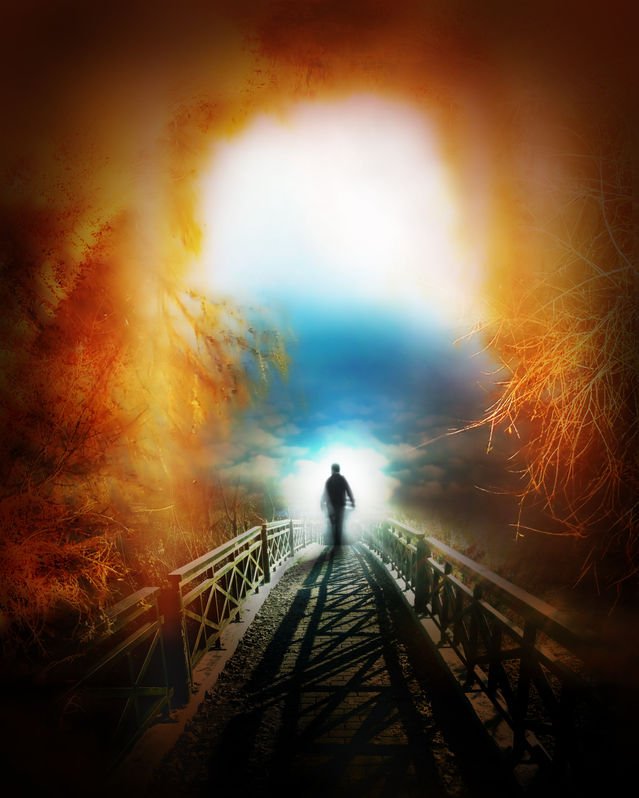
Few fears are as quiet and as powerful as the fear of what comes after death. It is not always dramatic or obvious. Sometimes it appears in small moments: lying awake at night, staring at a cemetery while passing by, or suddenly wondering what it feels like when consciousness ends. The fear of the afterlife is not simply fear of death itself it is fear of the unknown that follows.
Human beings are wired to understand their surroundings. We want explanations, timelines, and outcomes. The afterlife offers none of these with certainty. Religions describe heavens, reincarnation, spirit worlds, or peaceful nothingness, yet no living person can confirm the experience. This gap between belief and proof is where anxiety grows. The mind keeps asking questions it cannot answer, Will I still exist? Will I be aware? Will I be alone?
Another reason the afterlife creates fear is the loss of control it represents. In everyday life, people make plans, set goals, and influence their future through decisions. Death removes that control entirely. Whatever happens next if anything happens without negotiation. For many, that surrender feels unsettling, even more than the physical process of dying itself.
There is also an emotional dimension. People fear separation, leaving loved ones, being forgotten, or entering a state where connection is no longer possible. Much of human comfort comes from relationships, so imagining an existence where those bonds might disappear can feel deeply distressing. Even those who believe in an afterlife sometimes worry, What if it isn’t what I expect? What if I end up somewhere unfamiliar?
Interestingly, fear of the afterlife is often strongest not because of what people believe, but because of what they cannot imagine. The human brain struggles to picture nonexistence or a form of existence completely different from physical life. When imagination fails, uncertainty fills the space, and uncertainty often feels like danger.
Yet this fear also reveals something meaningful. Worrying about what comes after life is, in many ways, a reflection of how strongly people value being alive. It shows attachment to experiences, relationships, memories, and identity. The fear is not only about death it is about losing everything that makes life feel real and personal.
Throughout history, humans have created stories, spiritual traditions, and philosophies not just to explain the afterlife, but to soften the fear surrounding it. Whether one believes in a spiritual continuation, reincarnation, or peaceful nothingness, these ideas serve the same purpose: to bring comfort to the mystery.
The afterlife remains one of humanity’s greatest unanswered questions. And perhaps that is why it continues to both frighten and fascinate us. The unknown will always carry a shadow, but it also carries curiosity the quiet hope that whatever lies beyond the final moment may not be as terrifying as the imagination sometimes makes it seem.



 Love
Love Astrologer
 Dreams
 Life Coach
 Medium
 Numerologist
 Palm Reader
 Paranormal
 Past Life
 Tarot Reader