
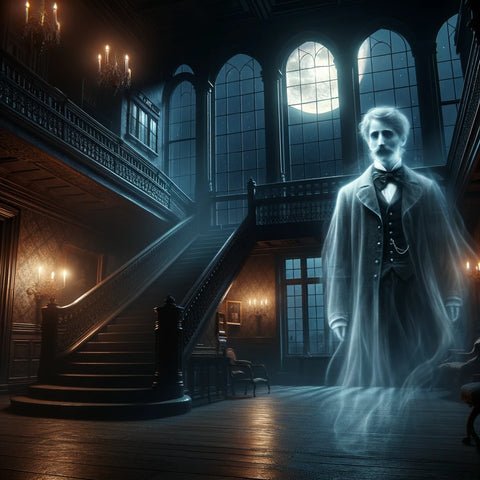
The concept of spirits lingering after death is a topic that spans cultures, philosophies, and religions, prompting inquiries into the nature of existence, consciousness, and the afterlife. The belief in lingering spirits often serves as a means of addressing the fear of death, providing comfort and consolation, and explaining unexplained phenomena. This essay will explore the reasons why spirits may be thought to linger, delving into psychological, cultural, and spiritual dimensions.
Psychological Perspective
From a psychological standpoint, the idea of lingering spirits can be seen as a manifestation of the human psyche grappling with the reality of mortality. The fear of the unknown and the finality of death can drive individuals to seek explanations that comfort them. This is particularly evident in cases of grief; individuals who have lost loved ones may experience feelings of unresolved issues or uncompleted tasks, prompting a belief that the spirit remains nearby to ensure closure.
Moreover, concepts like “unfinished business” provide a framework for understanding why some spirits are thought to linger. These unfinished matters may relate to emotional bonds, unsaid words, or unresolved conflicts. The desire for connection and the need for resolution can perpetuate the belief that spirits remain present, seeking closure before moving on.
Cultural and Religious Factors
Cultural narratives and religious beliefs play a significant role in shaping perceptions of spirits and their lingering presence. Many cultures have rich traditions regarding the afterlife, including beliefs about ancestors watching over the living, guiding them, or providing warnings. For instance, in many Indigenous traditions, the spirits of ancestors are believed to reside alongside their descendants, influencing their lives and protecting them. This belief fosters a sense of continuity and connection across generations.
Religions such as Buddhism and Hinduism incorporate concepts of reincarnation and karma, wherein souls are believed to linger in various states before rebirth. The idea that spirits may not yet be ready for their next life cycle reflects a broader understanding of existence as a journey rather than an endpoint.
Additionally, practices such as ancestor worship, séance, and rituals to honor the deceased are prevalent in many cultures, reinforcing the notion that spirits may play an active role in the lives of the living. These rituals provide a means for communication, remembrance, and the expression of ongoing relationships between the living and the dead.
Spiritual and Metaphysical Beliefs
On a deeper metaphysical level, the idea that spirits linger can relate to beliefs about the nature of consciousness and existence itself. Some spiritual philosophies posit that consciousness transcends the physical body and continues to exist after death, suggesting that spirits may linger in different dimensions or planes of existence. This perspective invites exploration of concepts like energy, vibration, and the interconnectedness of all beings.
Paranormal beliefs further fuel the idea of lingering spirits. Reports of hauntings and ghostly encounters often describe spirits that have not moved on due to emotional attachments to places, people, or significant events. Such experiences are sometimes interpreted as evidence of the spirit realm, leading individuals to consider the possibility that our understanding of life and death is not as clear-cut as it may seem.
The notion of spirits lingering after death encapsulates a complex interplay of psychological, cultural, and spiritual factors. As humans confront the mysteries of existence, the fear of death, and the desire for connection, the idea of lingering spirits offers a framework for understanding the continuity of relationships and the potential for an afterlife. Whether viewed through a psychological lens or a spiritually metaphysical one, the concept of lingering spirits resonates with our innate curiosity and longing for meaning in the face of life’s greatest mystery: death. Ultimately, the belief in lingering spirits serves as a testament to humanity’s enduring quest for understanding, connection, and reconciliation with the idea of mortality.



 Love
Love Astrologer
 Dreams
 Life Coach
 Medium
 Numerologist
 Palm Reader
 Paranormal
 Past Life
 Tarot Reader