
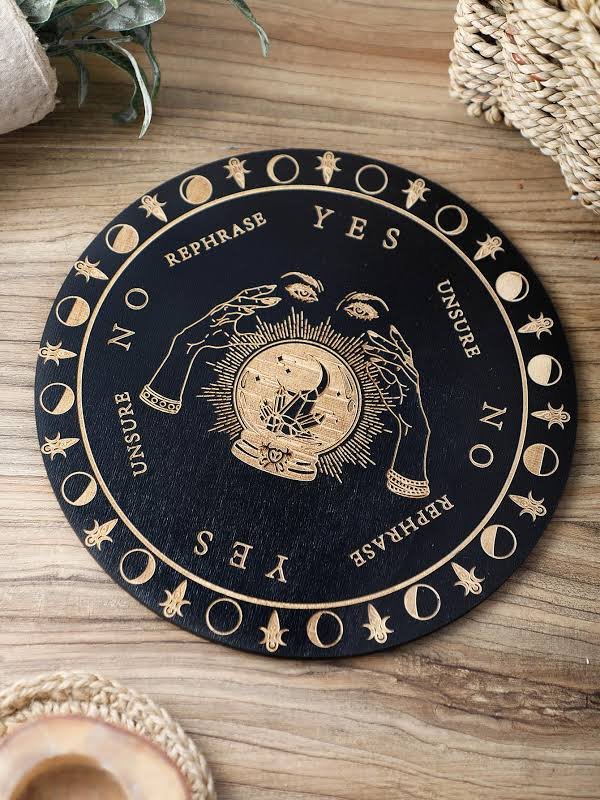
The Ouija board, also referred to as a spirit board or talking board, has intrigued and captivated individuals for over a century. This seemingly innocuous wooden or cardboard contraption, adorned with letters, numbers, and words, has been at the center of debates, folklore, and fascination. Its allure stems from the belief that it can serve as a conduit to the spirit world, facilitating communication between the living and the deceased. However, the Ouija board’s mysticism is entwined with psychological and cultural dimensions that contribute to its enduring popularity.
Originating in the late 19th century as a parlor game, the Ouija board gained popularity during a time of heightened interest in spiritualism and the supernatural. Its premise is simple: participants place their fingertips on a planchette, a heart-shaped pointer, which seemingly moves on its own across the board to spell out messages. This movement is often attributed to spiritual forces or unseen energies. Skeptics attribute it to the ideomotor effect, a psychological phenomenon where subconscious muscular movements influence seemingly involuntary actions.
The cultural context in which the Ouija board emerged plays a pivotal role in its intrigue. As society grappled with the mysteries of death and the unknown, the board provided a means to address profound questions about the afterlife and the nature of existence. It acted as a tool to seek comfort, closure, or even sensationalism. Its portrayal in media, from horror films to ghost stories, further fueled its mystique and contributed to its association with the supernatural.
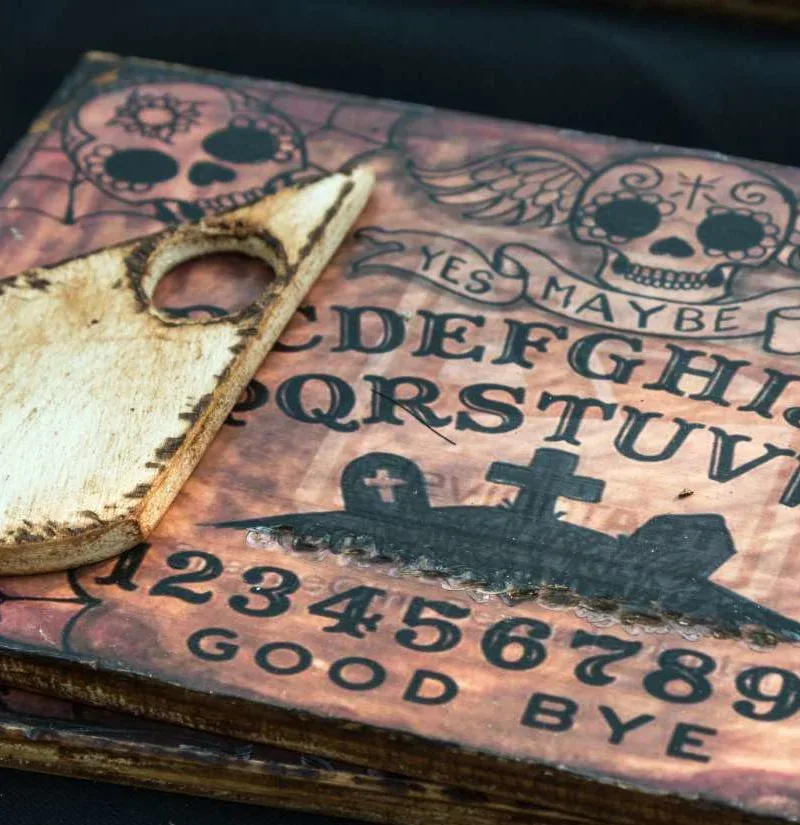
Psychologically, the Ouija board taps into our collective fascination with the unknown and the desire to connect with something beyond our understanding. The concept of communicating with spirits speaks to our innate curiosity about the mysteries of life and death. Furthermore, the communal experience of using the board can create a sense of shared vulnerability, intensifying emotional reactions and perceptions of the supernatural.
Critics argue that the Ouija board’s apparent communication with spirits is merely a manifestation of the participants’ subconscious minds. Ideomotor movements, combined with the “glimpse into the unknown” effect, can give the illusion of external forces at play. Scientific investigations have failed to provide concrete evidence of spirits influencing the planchette’s movement, leading many to dismiss the supernatural claims associated with the board.
In conclusion, the Ouija board is a complex cultural artifact that intertwines mysticism, psychology, and societal fascination. Its enduring popularity reflects our human desire to explore the unexplainable and find connections beyond the material world. Whether viewed as a tool of divination or dismissed as a product of psychology, the Ouija board continues to cast a spell over our collective imagination, reminding us of the enduring allure of the mysterious and the uncharted.




 Love
Love Astrologer
 Dreams
 Life Coach
 Medium
 Numerologist
 Palm Reader
 Paranormal
 Past Life
 Tarot Reader