
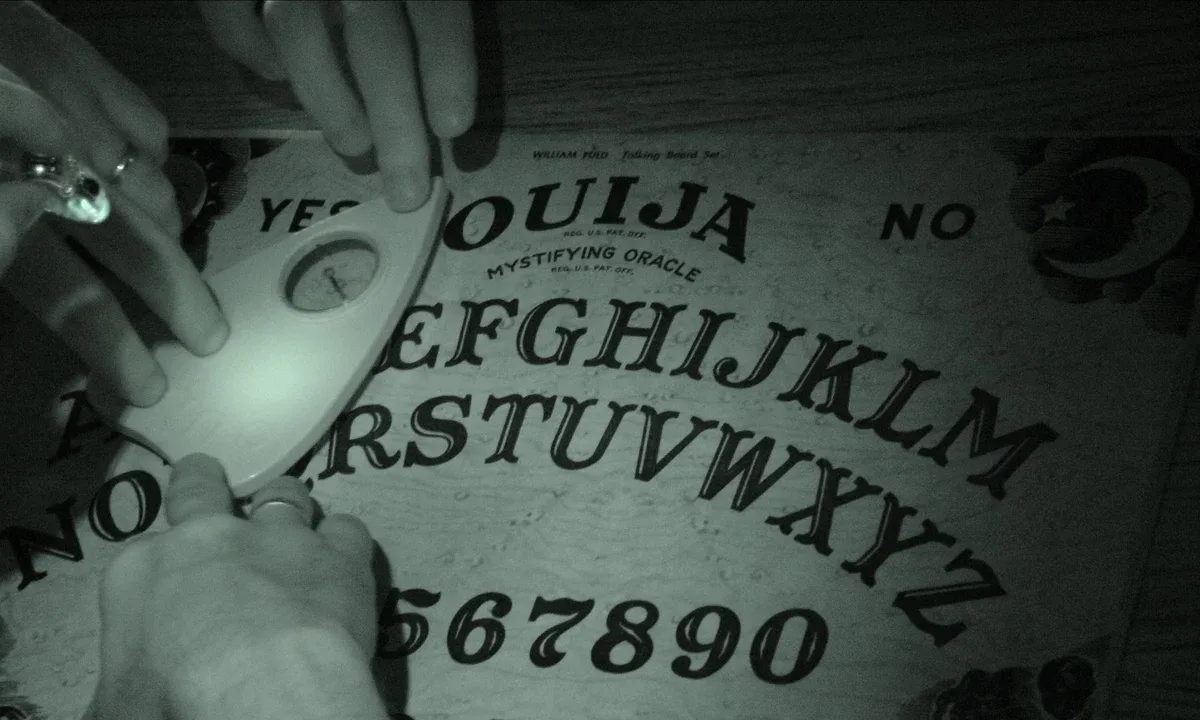
The Ouija board, often characterized as a simple wooden board inscribed with letters, numbers, and the words “yes,” “no,” and “goodbye,” has intrigued and terrified individuals since its commercialization in the late 19th century. The fear surrounding Ouija boards can be attributed to a combination of psychological factors, cultural beliefs, and the broader themes of the unknown and the supernatural.
Psychological Factors
One of the primary reasons Ouija boards scare people is deeply rooted in the psychological phenomenon of the “unexplained.” Many users report that they feel a palpable sense of fear and unease when using the board, which can be attributed to the collective belief in its power to communicate with the dead. This belief can create a heightened state of anxiety, as individuals grapple with the fear of encountering something they do not understand.
The ideomotor effect also plays a critical role in the fear associated with Ouija boards. This psychological phenomenon occurs when individuals make motions unconsciously, allowing their fingers to move towards letters or numbers on the board without their conscious intention. For many, this involuntary movement can be interpreted as a connection to a spiritual realm, intensifying the fear of relinquishing control over their actions.
Cultural Beliefs
Culturally, Ouija boards are often associated with the occult and have been portrayed in various forms of media as dangerous tools to connect with malevolent spirits. Movies, books, and television series frequently depict characters who suffer dire consequences after using a Ouija board, reinforcing the idea that these boards open a portal to terrifying entities. This portrayal has contributed significantly to the fear surrounding the board, as folk narratives and urban legends create an aura of danger around its use.
In many cultures, discussions of death and the afterlife are fraught with tension and taboo. The Ouija board acts as a bridge to these sensitive topics, making it an uncomfortable and potentially frightening experience. The fear of what lies beyond death is a common theme in human life, and the Ouija board forces individuals to confront these existential questions in a very tangible way, often leading to feelings of dread.
The Fear of the Unknown
At the heart of the fear associated with Ouija boards is the fundamental human fear of the unknown. Engaging with something that supposedly connects to a different realm invites uncertainty about what might be encountered. Whether it’s the fear of communicating with a deceased loved one or the apprehension of encountering an angry spirit, the unknown results in trepidation. People often find comfort in certainty, and using a Ouija board challenges this comfort by presenting questions that go beyond the physical world and into the enigmatic nature of existence.
The fear around Ouija boards is a complex interplay of psychological effects, cultural beliefs, and the primal fear of the unknown. While some individuals approach the board with curiosity and lightheartedness, many find themselves gripped by an overwhelming sense of dread. This duality — the attraction to and fear of the unknown — encapsulates humanity’s complex relationship with death, the afterlife, and the supernatural. Ultimately, the Ouija board serves as a mirror reflecting our deepest fears and desires, compelling us to confront the boundaries of our understanding and the mysteries that lie beyond.




 Love
Love Astrologer
 Dreams
 Life Coach
 Medium
 Numerologist
 Palm Reader
 Paranormal
 Past Life
 Tarot Reader