
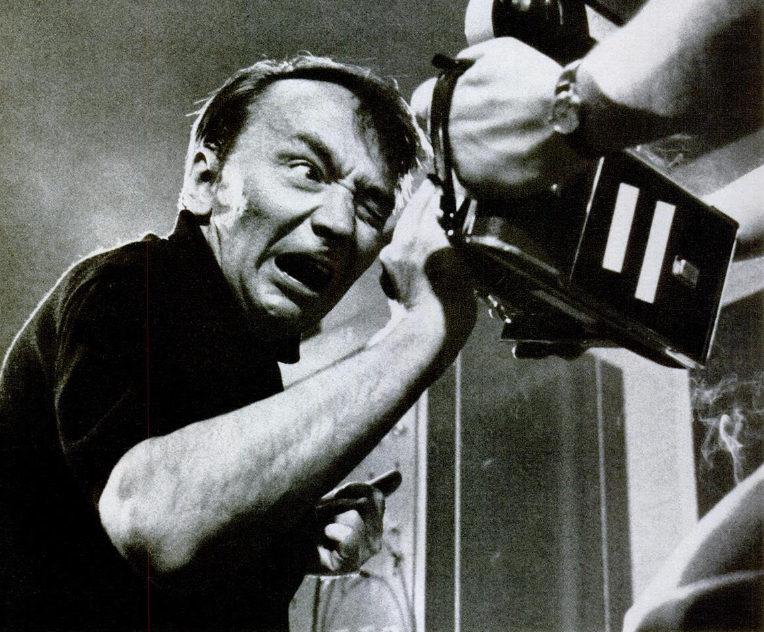
When people discuss psychic abilities, they usually mention telepathy, clairvoyance, mediumship, or predicting the future. One ability that rarely comes up is thoughtography, also known as thought photography.
Thoughtography is the alleged ability to produce images on photographic film or other recording materials through mental concentration alone. The idea is that a person can focus on an image in their mind and somehow cause it to appear in a photograph without using traditional photographic methods.
The concept has been around for more than a century. In the early 1900s, Japanese researcher Tomokichi Fukurai investigated a phenomenon known as nensha, or thought photography. His research involved individuals who claimed they could mentally project images onto photographic plates. Although his experiments attracted attention, the results were disputed.
One of the best-known cases involved Ted Serios during the 1960s. Serios claimed he could create images on Polaroid film by concentrating his thoughts. Psychiatrist Jule Eisenbud studied his claims and documented the experiments in his book The World of Ted Serios, published in 1967.
Some of the photographs appeared to contain buildings, shapes, and other recognizable images, while others were blurry or blank. The experiments became controversial, with skeptics questioning whether photographic tricks or weaknesses in the testing methods could explain the results.
Thoughtography is sometimes associated with psychokinesis, the alleged ability to influence physical matter through mental intention. In this case, the supposed influence would involve photographic materials rather than moving physical objects.
Unlike more familiar psychic abilities, thoughtography has received relatively little attention over the years. There have been few widely documented cases, and the phenomenon has never been scientifically established through reliable, repeatable testing.
Today, thoughtography remains an interesting part of paranormal history. Although modern technology can reconstruct approximate images from recorded brain activity, this process is very different from the claimed psychic ability to project thoughts directly onto film.
What makes thoughtography unusual is the idea behind it that something imagined privately in the mind could leave a visible impression in the physical world.
Whether viewed as a paranormal claim, a historical curiosity, or an example of our fascination with consciousness, thoughtography remains one of the lesser-known subjects in the study of alleged psychic phenomena.




 Love
 Astrologer
 Dreams
 Life Coach
 Medium
 Numerologist
 Palm Reader
 Paranormal
 Past Life
 Tarot Reader