
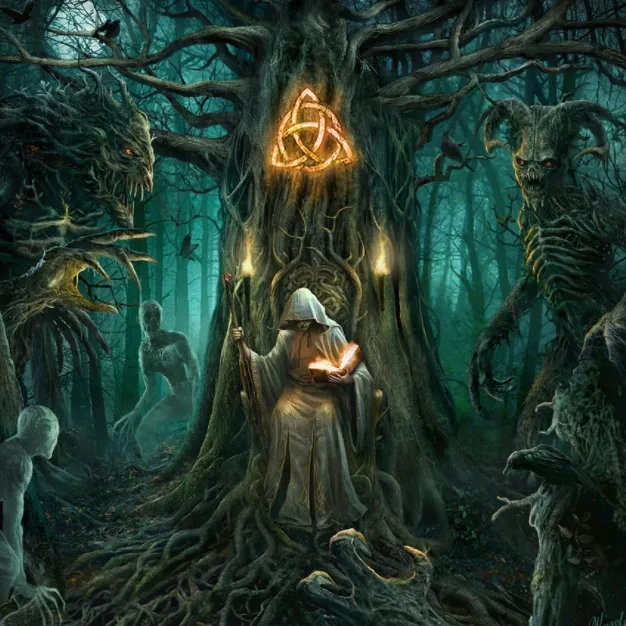
Druidism, or Druidry, is a modern spiritual movement that draws inspiration from the ancient practices and beliefs of the Druids, who were the priestly class in ancient Celtic cultures, particularly in Britain, Ireland, and Gaul (modern-day France). The earliest historical references to Druids date back to around 200 BCE, but much of what is known about them comes from Roman sources and later interpretations, as the Druids did not leave behind written records.
Key Features of Druidism:
- Nature Reverence: Druidism places a strong emphasis on nature, ecology, and the interconnectedness of all living things. Practitioners often celebrate the changing seasons and cycles of life.
- Spiritual Practices: Many modern Druids engage in rituals, meditation, and ceremonies to honor the earth, the sun, the moon, and various elements. Practices can vary widely among different Druidic groups.
- Belief System: While there is no single doctrine in Druidism, many practitioners believe in a spiritual force or life energy that flows through nature and all living things. Some may also incorporate elements of polytheism, honoring various gods, goddesses, and spirits associated with nature.
- Heritage and Reconstruction: Some modern Druids attempt to reconstruct ancient Druidic practices using historical texts, archaeology, and folklore. Others have developed entirely new interpretations and practices that reflect contemporary values.
- Community and Fellowship: Many Druids participate in organized groups or orders that provide a sense of community. Examples include the Order of Bards, Ovates, and Druids (OBOD) and the Ancient Order of Druids.
- Celtic Influence: Druidism often draws from Celtic mythology, history, and cultural traditions. Stories of figures like the goddess Brigid or the hero Cú Chulainn are common in Druidic teachings.
- Environmentalism: Due to its strong connection to nature, Druidism often aligns with ecological and environmental movements, promoting sustainability and respect for the earth.
Modern Druidism:
Druidism has experienced a revival since the 18th and 19th centuries, influenced by Romanticism and the Celtic Revival. Today, it exists in various forms and can be seen as part of the broader Neopagan movement. Celebrations such as Beltane, Samhain, and the Summer and Winter Solstices are commonly observed by modern Druids.




 Love
Love Astrologer
 Dreams
 Life Coach
 Medium
 Numerologist
 Palm Reader
 Paranormal
 Past Life
 Tarot Reader