
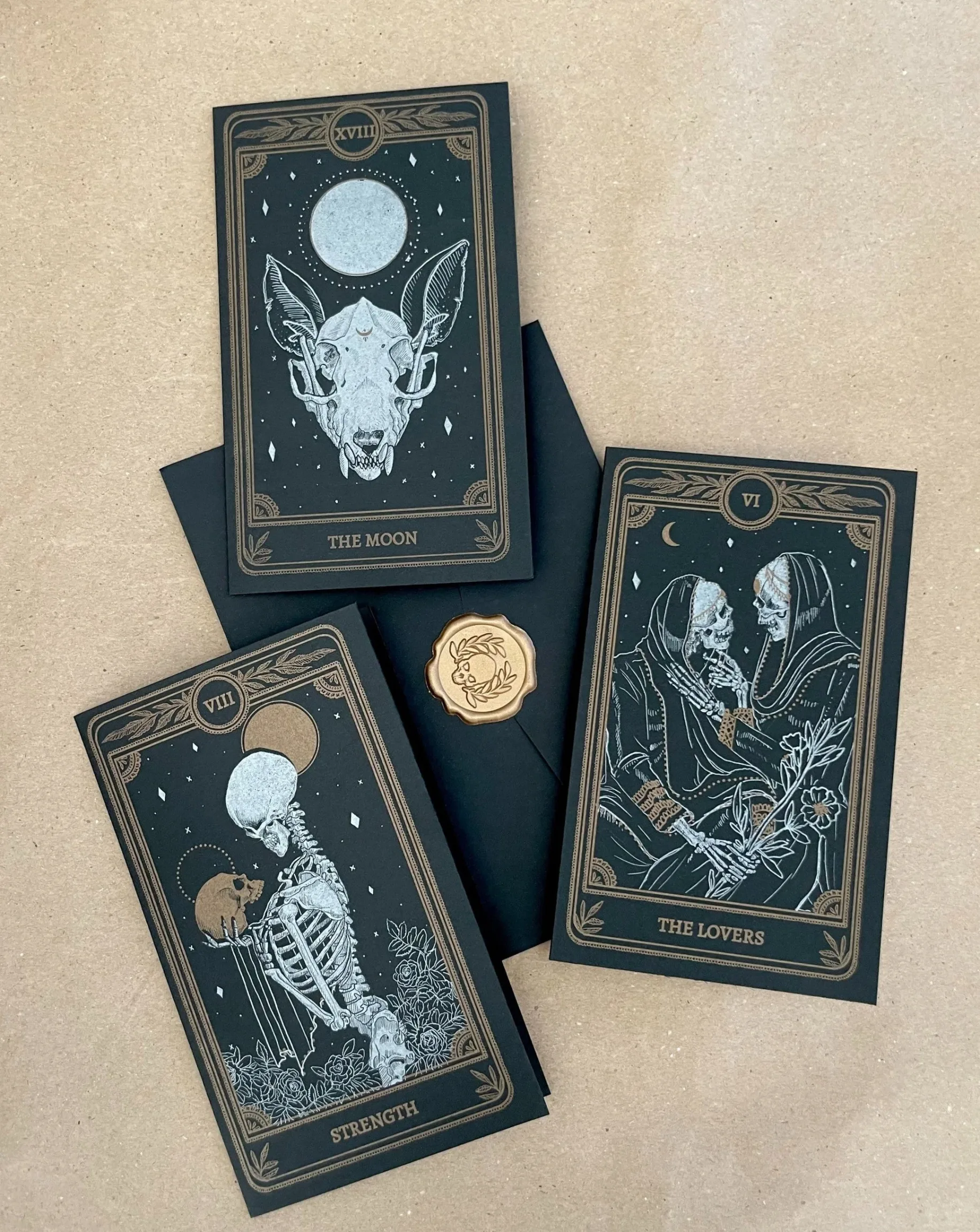
There is a certain intimacy in sitting down with a tarot deck. The shuffle itself feels like a conversation beginning soft, symbolic, and slightly mysterious. Many people come to tarot hoping for answers, certainty, or even reassurance about the unknown. But tarot, at its core, is not a rigid fortune-teller or a tool for control. It is a mirror one that reflects energy, perspective, and possibility rather than fixed outcomes. And like any meaningful conversation, the quality of what you receive depends greatly on what you ask.
Some questions, though tempting, simply do not belong at the tarot table.
One of the most common missteps is asking questions that reach into someone else’s private thoughts or intentions. It can feel natural to wonder what an ex is thinking, whether a partner is hiding something, or if someone is being dishonest. Yet tarot is not meant to intrude into another person’s inner world without their consent. When you ask these kinds of questions, the reading often becomes distorted less about truth and more about projection. The cards begin to echo your fears or hopes rather than reveal anything grounded. Tarot works best when it centers you your energy, your reactions, your growth. It is far more powerful to ask what you should understand about a connection than to try to decode someone else’s mind.
Equally limiting are questions that demand a simple yes or no. Life rarely unfolds in such clean, binary lines, and tarot certainly doesn’t operate that way. Asking whether something will happen or not strips away the depth the cards are designed to offer. A “yes” or “no” may feel satisfying in the moment, but it often lacks the nuance needed to truly guide you. Tarot thrives in complexity in the layered influences, unseen patterns, and subtle shifts that shape an outcome. When you allow space for that complexity, the reading becomes richer, more revealing, and ultimately more useful.
Timing questions are another quiet trap. The desire to know when something will happen is deeply human. When will love arrive? When will life finally change? But tarot does not speak the language of calendars and exact dates. It speaks in cycles, seasons, and emotional readiness. When you try to force timing out of the cards, the answers can feel vague or frustrating. Instead of giving you a fixed point in time, tarot gently redirects you toward where you are now what you need to focus on, what you are moving through, and what energy you are building toward.
Perhaps the most subtle, yet most important, boundary involves questions that give away your personal power. When you ask the cards to make decisions for you to tell you exactly what to do or which path to take you shift the responsibility away from yourself. Tarot is not meant to replace your judgment or intuition; it is meant to deepen it. The most meaningful readings don’t hand you instructions they illuminate your options, reveal hidden dynamics, and help you see yourself more clearly. The choice, always, remains yours.
There is also a quiet danger in asking the same question repeatedly, especially when the answer isn’t what you hoped for. Returning to the deck again and again in search of a different outcome often creates confusion rather than clarity. The cards begin to contradict each other, not because the truth has changed, but because the intention behind the question has become tangled in anxiety. Tarot requires a certain level of trust not just in the cards, but in your ability to sit with what they reveal.
Questions rooted in fear tend to follow a similar pattern. When you approach the deck from a place of worry wondering if something bad will happen or assuming the worst the reading often reflects that emotional state. Tarot does not exist to amplify fear; it exists to bring awareness. When fear is present, the most powerful thing you can ask is not what will go wrong, but what is driving that fear in the first place.
Finally, there are areas where tarot simply should not be used as a decision-making tool at all matters of health, legal outcomes, or life-and-death concerns. These are situations that require real-world expertise, grounded advice, and tangible action. Tarot may offer emotional or spiritual perspective, but it should never replace professional guidance in serious circumstances.
Tarot is less about predicting the future and more about deepening your relationship with the present. It responds best to curiosity rather than control, reflection rather than desperation. When approached with respect, it becomes something far more meaningful than a tool for answers it becomes a companion for insight.
The quiet truth is this the cards will always meet you where you are. Ask from a place of clarity, and they will offer clarity in return. Ask from a place of fear or control, and they will reflect that too. The power of tarot has never been in forcing certainty from the unknown it lies in learning how to ask the kind of questions that bring you back to yourself.

 Love
Love Astrologer
 Dreams
 Life Coach
 Medium
 Numerologist
 Palm Reader
 Paranormal
 Past Life
 Tarot Reader