
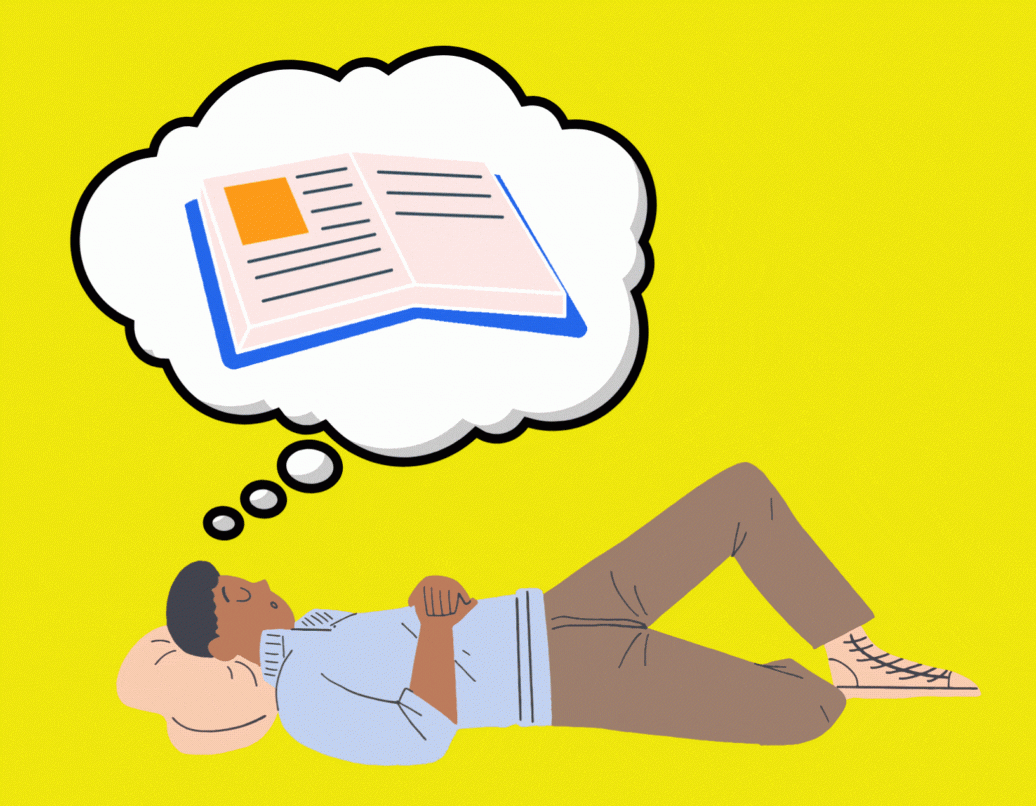
Dreams have long captivated the human imagination, serving as windows into our subconscious thoughts, fears, and desires. Among the myriad of dream experiences, a common theme emerges—dreams related to taking an exam, often referred to as “exam anxiety” dreams. These dreams frequently involve scenarios where individuals find themselves unprepared for an important test, experiencing overwhelming panic and stress. In this essay, we will explore the psychological underpinnings of exam-related dreams, their implications for performance in high-stakes situations, and the broader cultural context that shapes our collective understanding of success and failure.
Exam dreams often arise from the subconscious mind grappling with anxiety and self-doubt. Psychologically, they can be traced back to the pressures that individuals feel regarding academic performance and achievement. The school system, with its emphasis on standardized testing and measurable outcomes, instills in students a fear of failure that can linger into adulthood. This fear is not unfounded; research has shown that anxiety can significantly impair cognitive function, leading to decreased performance in actual examination scenarios. The dream serves as a manifestation of these stressors, allowing the dreamer to confront their fears in a less controlled environment.
Moreover, these dreams can highlight an underlying sense of inadequacy or fear of judgment. The recurring motif of showing up unprepared—often to a test one has not studied for—can mirror feelings of imposter syndrome, where individuals doubt their accomplishments and fear exposure as a “fraud.” This aspect of exam dreams taps into broader existential anxieties related to identity, competence, and societal expectations.
The implications of exam dreams extend beyond the dream state, impacting real-life performance in academic and professional settings. The experience of dreaming about an exam can leave individuals feeling anxious and less confident when faced with actual testing or evaluative situations. This anxiety can lead to a self-fulfilling prophecy, where the fear of failure disrupts concentration and preparation, ultimately resulting in poor performance.
Conversely, understanding the nature of these dreams can offer opportunities for personal growth. By acknowledging and confronting their fears within the dream context, individuals may develop resilience and coping strategies that translate into actual testing environments. Techniques such as visualization, mindfulness, and cognitive restructuring can help mitigate the anxiety associated with assessments, actively transforming fear into a more manageable experience.
Culturally, the phenomenon of exam dreams reflects societal values that prioritize achievement, competition, and measurable success. In many educational systems, the focus on grades and standardized tests is pervasive, cultivating a mindset that equates worth with performance. This culture of perfectionism can contribute to heightened anxiety, manifesting in the form of vivid dreams centered around examination scenarios. Exam dreams, therefore, may not only be personal reflections of anxiety; they can also be seen as critiques of societal expectations that create high-pressure environments.
As conversations around mental health and well-being have evolved in recent years, there is a growing awareness of the negative impacts of such cultural pressures. Educational institutions are increasingly recognizing the need to foster a more holistic approach to learning, emphasizing emotional resilience and well-being alongside academic success. By shifting the narrative surrounding exams and assessments, we can create a more supportive environment that mitigates the anxiety that often manifests in dreams.
In conclusion, exam dreams serve as a profound reflection of our innermost anxieties and societal pressures surrounding performance. By examining their psychological underpinnings and real-world implications, we can better understand the challenges individuals face in high-stakes situations. As we continue to navigate a culture that often prioritizes achievement over well-being, fostering a more balanced approach to success can help alleviate the fears that invade our dreams. Ultimately, embracing vulnerability, cultivating resilience, and shifting societal expectations can pave the way for a healthier relationship with both testing and self-worth, both in our waking lives and in the realm of our dreams.




 Love
Love Astrologer
 Dreams
 Life Coach
 Medium
 Numerologist
 Palm Reader
 Paranormal
 Past Life
 Tarot Reader