
Palmistry, also known as chiromancy or palm reading, is an ancient art that involves studying the lines, shapes, and mounts of the human hand to gain insights into an individual’s personality, temperament, and potential future. Among the various aspects of palmistry, the “mounds” or “eminences” of the palm hold significant importance, as they are believed to represent different facets of a person’s character and life experiences.
Understanding Palm Mounds
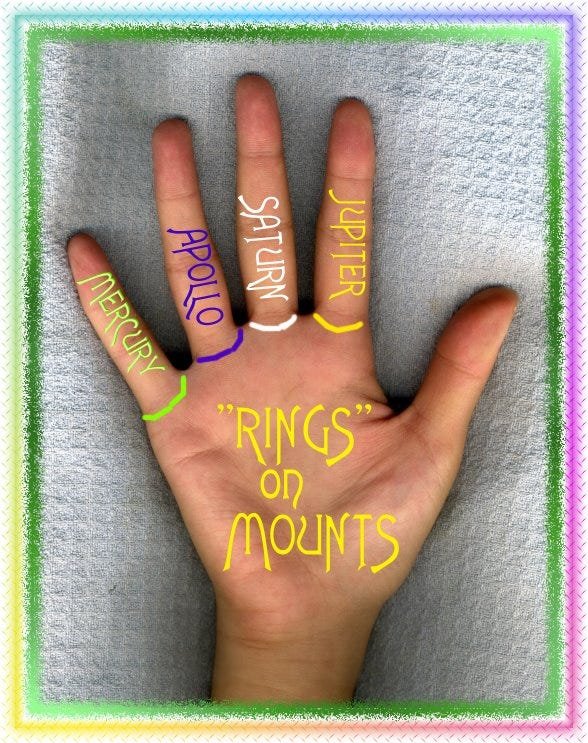
The palm is divided into several prominent raised areas called mounds or mounts. Each mound is situated at the base of a specific finger or in particular regions of the palm. These mounds are formed by underlying muscles, nerves, and tissues, and their prominence or flatness can reveal certain traits about an individual.
The primary palm mounds include:
- Mount of Venus: Located at the base of the thumb, it signifies love, passion, and vitality.
- Mount of Jupiter: Situated beneath the index finger, it reflects ambition, leadership, and confidence.
- Mount of Saturn: Found under the middle finger, it indicates wisdom, responsibility, and discipline.
- Mount of Apollo (Sun): Located beneath the ring finger, it relates to creativity, fame, and artistic talent.
- Mount of Mercury: Situated under the little finger, it signifies communication skills, wit, and adaptability.
- Mount of Luna (Moon): Found along the side of the palm opposite the thumb, representing imagination, intuition, and emotional sensitivity.
Significance of the Mounds in Palmistry
Each mound’s size, prominence, and texture are analyzed to assess different personality traits:
- Prominent Mounds: An enlarged or well-developed mound suggests strong traits associated with that mount. For example, a prominent Mount of Venus indicates a passionate and affectionate nature.
- Flat or Hollow Mounds: A flatter or sunken mound may imply lesser emphasis on the qualities it represents.
- Texture and Color: Roughness or discoloration can indicate emotional turbulence or health issues related to that aspect of personality.
Interpreting the Mounds
Palmists interpret the mounds in combination with the lines and other features of the hand. For example, a well-developed Mount of Jupiter combined with strong vertical lines may suggest a confident leader, while a flat Mount of Mercury might indicate a reserved communicator.
Cultural and Historical Perspectives
Historically, palmistry has been practiced in many cultures, including Indian, Chinese, and Western traditions. The concept of palm mounds originates from these ancient systems, where they are considered vital indicators of an individual’s destiny and character.
The mounds of the palm serve as a vital component in the art of palmistry. By examining their size, shape, and condition, practitioners seek to understand the deeper layers of a person’s personality and potential life path. While palmistry is often regarded as a mystical art, many believe that it offers valuable insights into human nature, helping individuals recognize their strengths and areas for growth. Ultimately, the study of palm mounds underscores the intricate connection between physical features and the complex tapestry of human character.




 Love
Love Astrologer
 Dreams
 Life Coach
 Medium
 Numerologist
 Palm Reader
 Paranormal
 Past Life
 Tarot Reader